
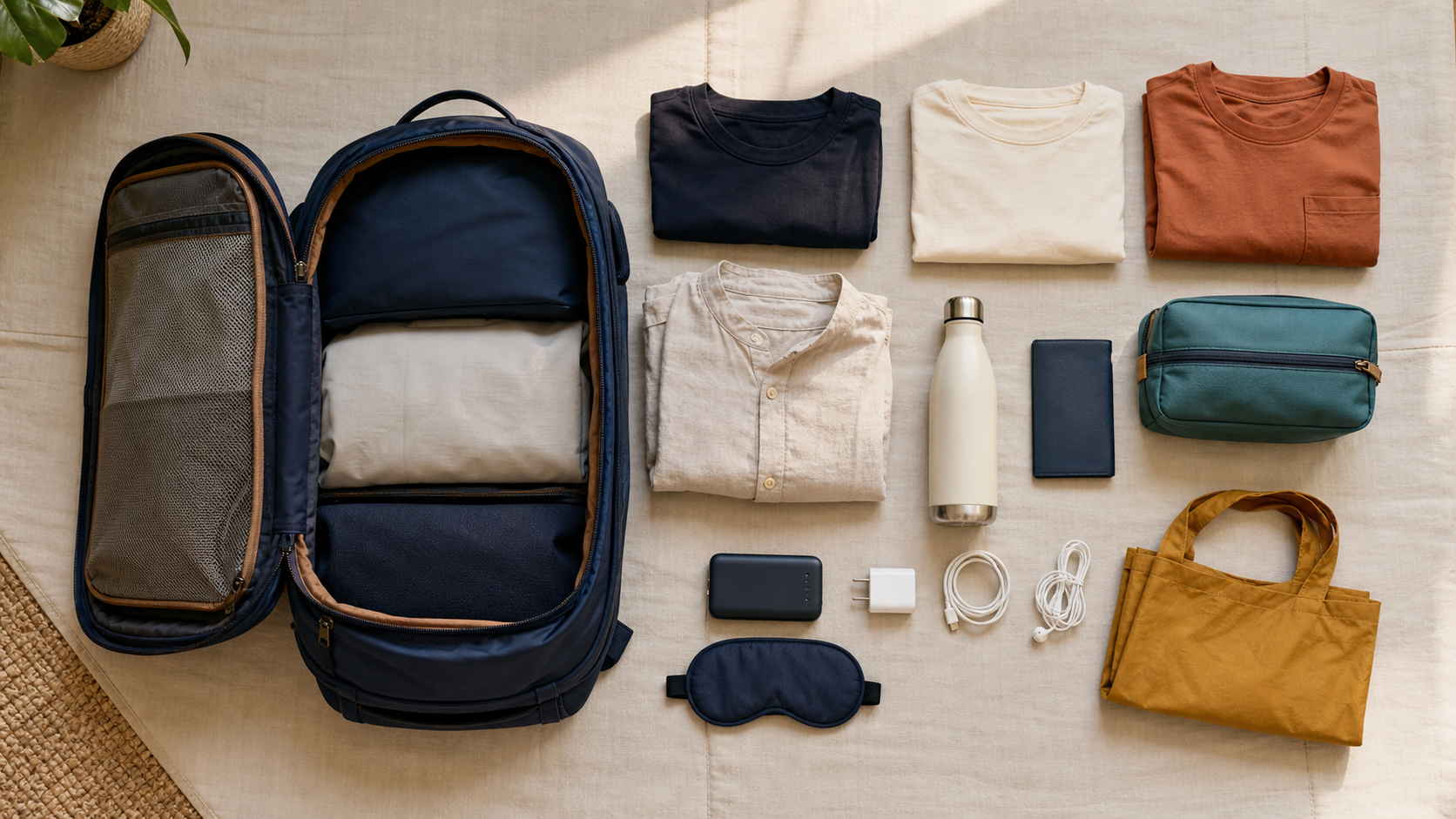
Confirm the airline rules, build a small clothing system and keep documents, power and one backup payment method easy to reach.
Packing light is not about surviving with the fewest possible objects. It is about carrying enough for the trip without paying to transport decisions you made “just in case.” This practical checklist works for a short city break, a budget trip or any journey where you want to move easily.
Check the rules before you make the list
Airlines can have different cabin-bag dimensions, weight limits and personal-item rules, even on similar routes. Check the allowance shown on your exact booking. Also check current security restrictions for liquids, batteries and sharp objects at the airports you will use. Do not assume a rule from a previous trip still applies.
Documents and money
- Government-issued identification and any required visa or permit.
- Boarding passes, accommodation details and key bookings available offline.
- One primary payment method and one backup stored separately.
- A modest amount of local cash where cards or mobile payments may not work.
- Travel-insurance information and emergency contact details.
Keep digital copies in a secure account you can reach from another device. Do not store every original and backup in the same wallet.
Clothes: build a small system
Choose a compact colour palette so most tops and bottoms work together. For a typical three-to-five-day trip, start with three tops, two bottoms, one light layer, underwear and socks for the trip, sleepwear and one pair of comfortable shoes worn in transit. Adjust for weather, activities and access to laundry.
Wear the bulkiest footwear and outer layer while travelling. Pack fabrics that dry reasonably quickly and do not require special care. One versatile outfit for a nicer meal is usually more useful than several highly specific options.
Toiletries and health
- Toothbrush, toothpaste, deodorant and the skincare you actually use.
- Sunscreen appropriate for the destination and planned time outdoors.
- Prescription medicines in suitable packaging, plus any supporting documents required for travel.
- A few basic personal medicines you know are appropriate for you.
- Hand sanitiser, tissues and a few adhesive bandages.
Decant products only into properly labelled, leak-resistant containers. Pack liquids in accordance with the current airport rules and keep the bag easy to remove at security.
Technology
- Phone, charging cable and a compact wall charger.
- Power bank carried according to airline rules—usually in cabin baggage, not checked luggage.
- Travel adapter if the destination uses a different socket.
- Earphones and any essential camera or e-reader.
- Downloaded maps, tickets, translation data and entertainment for offline use.
Leave the laptop at home unless you have a specific use for it. One charger with multiple suitable ports can reduce bulk, but test it before the trip.
Small items that solve real travel problems
- An empty reusable water bottle to fill after security.
- A compact tote or foldable day bag.
- A pen, a few reusable zip bags and a small laundry bag.
- Earplugs and an eye mask for noisy or bright journeys.
- A light scarf or layer for cold cabins and changing weather.
The final ten-minute edit
Lay everything out before it enters the bag. Remove duplicate functions, outfits without a clear occasion and items easily available at the destination. Check the packed weight, then walk around with the bag for a few minutes. If it is uncomfortable at home, it will feel worse after stairs, queues and a long transfer.
A good carry-on is not packed for every possible version of the trip. It is packed for the trip you have actually planned, with enough flexibility for one change of weather or schedule.
Keep reading: How to Choose a Power Bank That Actually Matches How You Use Your Devices and Jaipur Old City Walking Route: A Slow One-Day Plan Without the Rush.