A room usually feels unfinished for one of five reasons: the light is flat, everything sits at the same height, the surfaces look scattered, there is no texture, or the eye has nowhere calm to land. More furniture rarely fixes those problems. Sometimes it makes the room heavier.
Start by choosing what the room should feel like
Before buying anything, choose the job of the room. A bedroom may need to feel softer. A living room may need to feel more welcoming. A desk corner may need to feel clearer. If you do not name the feeling first, every nice object starts looking like a solution.
The easiest test is simple: stand at the entrance and ask what your eye notices first. If the answer is wires, clutter, a blank wall, harsh white light or a random pile of things, that is the first problem to solve.
Use one focal point, not five small decorations
A finished room usually has one clear visual anchor. It can be a lamp beside a chair, a mirror above a console, framed art over a bed, a plant in a dull corner or a tidy shelf with breathing room. The mistake is buying many small decor pieces and spreading them everywhere. That creates effort, not finish.
- For a blank wall, try one larger piece instead of many tiny frames.
- For a dark corner, try a warm lamp before buying another table.
- For a scattered surface, use a tray to group the objects that must stay out.
- For a narrow room, place a mirror where it reflects light or depth, not clutter.
Fix the lighting before blaming the furniture
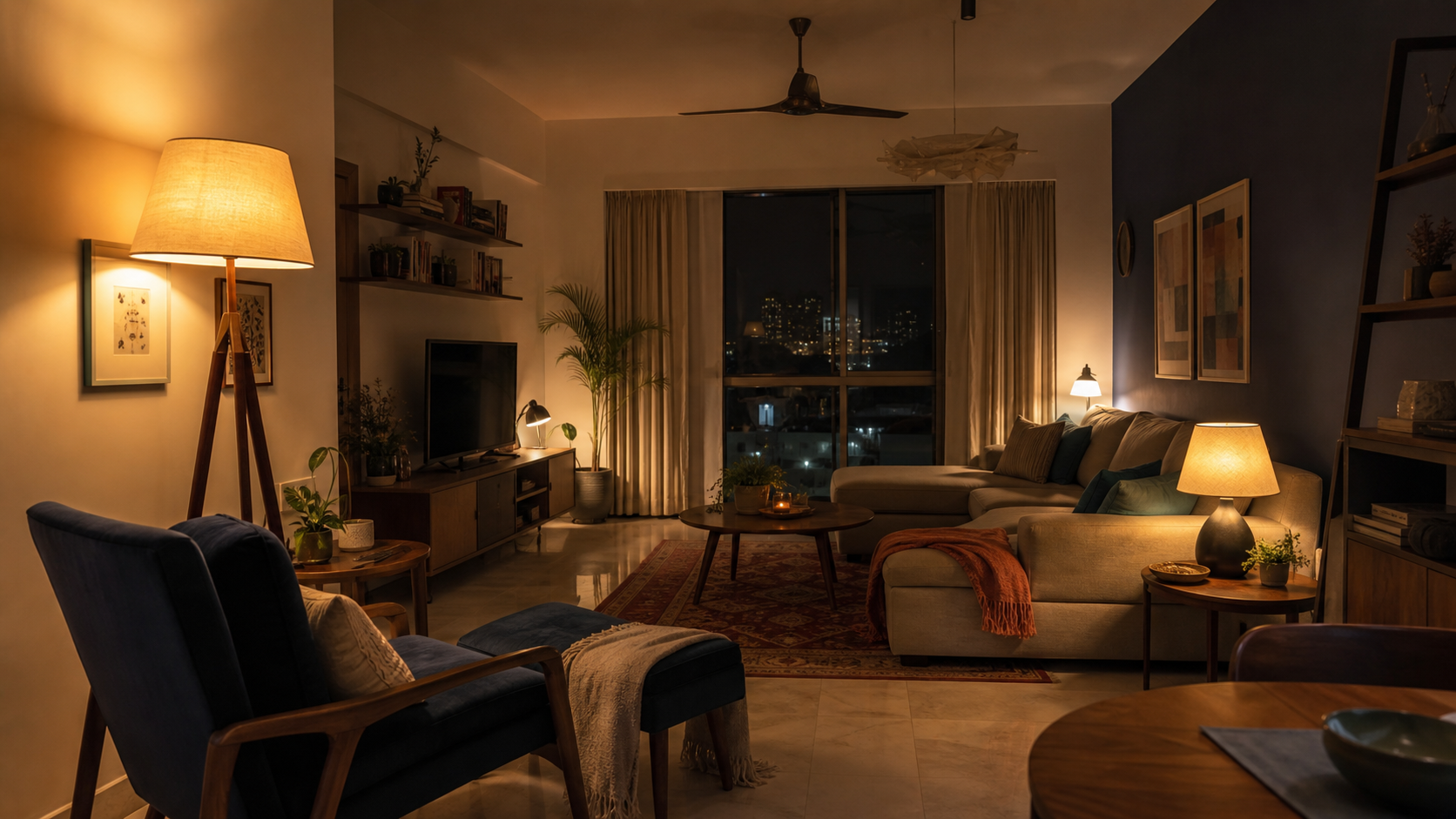
Many rooms feel unfinished because the only light is a ceiling tube or a harsh bulb. A lamp changes the mood faster than most decor. Use warm light in relaxing spaces, neutral light where you need clarity, and avoid cool white bulbs in bedrooms and calm corners unless there is a specific task.
If the room feels flat at night, add one light at eye level or below. A table lamp, floor lamp or wall light creates shadow and depth. For the basics, connect this with the existing guides on warm versus cool light and different types of lamps.
Add height so the room does not feel flat
If everything in a room is at sofa height, the space can feel low and unfinished. Add one vertical element: a tall plant, a floor lamp, a leaning mirror, curtains hung higher, a narrow shelf or a taller artwork. Height gives the eye a path through the room.
This does not mean filling every wall. One good vertical moment is enough for a small room. In rented apartments, a floor lamp, plant stand or full-length mirror often gives height without drilling too many holes.
Use texture instead of more objects
Texture makes a room feel lived in without adding visual noise. A cotton throw, linen cushion cover, cane tray, woven basket, warm rug or matte ceramic piece can soften a room that feels too plain. Texture works best when the colour palette stays calm.
If the room already has many colours, add texture in neutral shades. If the room is very plain, use one deeper accent colour and repeat it once. The repetition makes the choice look intentional.
What to buy first
Start with the most visible problem. If the room is harsh at night, buy a lamp. If the wall feels empty, choose one mirror or artwork. If surfaces are messy, buy a tray or basket. If the room feels flat, add height. Buy the fix, not the prettiest object in isolation.
What to skip
- Do not buy tiny decor pieces before solving light and layout.
- Do not copy a full Pinterest room if your space has different light and storage.
- Do not add more open shelves if you dislike maintaining display surfaces.
- Do not buy a large rug without measuring door clearance and furniture placement.
A room feels finished when the useful things have a place, the light feels intentional and the eye knows where to rest. That is a better goal than making every corner “decorated.”
Keep reading: Ditch the Overhead Light: How to Layer Lamps for a Better Home.