The best smart home gadgets for rented spaces plug in, stick on, or sit on a shelf, and they leave with you.
Most smart home guides are written for homeowners. They assume you can drill into a wall, rewire a light switch, or install a video doorbell that replaces your existing one. None of that works in a rented home, and trying it risks your deposit for a feature you’ll leave behind anyway. The gadgets that actually make sense for renters share three traits: they don’t require permanent modification, they’re powered by battery or a normal plug, and you can remove them without a trace in under five minutes.
Smart plugs, not smart switches
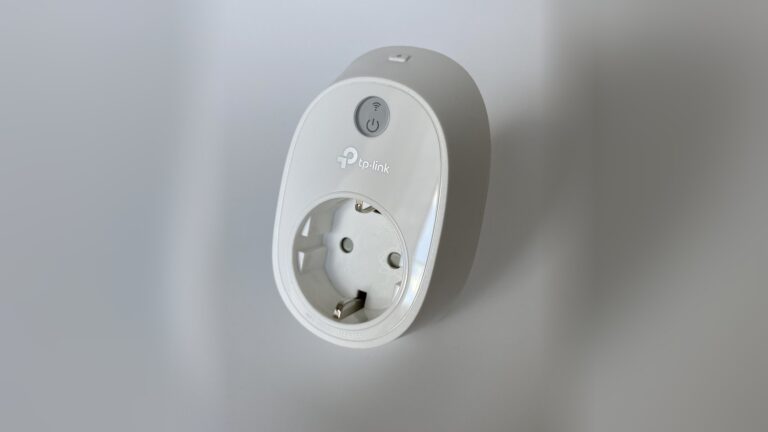
A smart switch replaces your wall switch — that’s an electrician’s job and a landlord conversation. A smart plug sits between your existing lamp or appliance and the wall socket. It does most of what a smart switch does — scheduling, remote on/off, voice control — without touching any wiring. This is usually the single most useful smart home purchase for a rented space, because it turns any plugged-in device into something you can control from your phone.
Battery-powered motion and door sensors
Sensors that stick on with adhesive pads, rather than screw-mounted ones, let you monitor doors, cabinets, or motion in a room without putting a hole in anything. Check the adhesive strength against your specific door or wall material before committing — cheap adhesive on textured paint is the most common failure point people report.
Portable smart lighting
Freestanding smart lamps and plug-in smart bulbs give you the lighting control that built-in smart fixtures offer, without an electrician. This pairs well with a layered-lighting approach: one ambient smart lamp and one task lamp will do more for a room than a single smart ceiling fixture ever could.
A stick-on or freestanding video device, not a hardwired doorbell
Hardwired smart doorbells typically need to replace your existing doorbell wiring, which most rental agreements won’t allow without approval. Battery-powered options that mount over your existing doorbell or sit near the door solve the same problem — seeing who’s there — without the wiring.
What doesn’t work for renters
- In-wall smart switches and dimmers, unless your landlord has explicitly approved the installation.
- Smart thermostats that require replacing existing wired thermostat hardware.
- Anything requiring a hole through an exterior wall for a sensor or camera cable.
- Built-in smart shower or water systems that alter existing plumbing.
Common mistakes to avoid
- Buying a device before checking its removal method — some “renter-friendly” adhesive is genuinely one-time-use.
- Assuming Wi-Fi range will be even through a whole apartment; test placement before buying multiples.
- Choosing devices tied to a subscription you don’t actually need for basic scheduling and control.
What to buy first
Start with a single smart plug on the device you actually forget to turn off — a lamp, a fan, a kettle. It’s the cheapest way to find out whether a smart home habit is one you’ll actually keep. A plug-in pedestal fan is renter-safe; replacing a hardwired ceiling fan usually needs landlord approval — and when you do replace one, use a quiet, efficient model from the BLDC ceiling fan buying guide.
Keep reading: Robot Vacuums: Worth It or Not? A Framework Before You Buy One and Ditch the Overhead Light: How to Layer Lamps for a Better Home.