A good BLDC ceiling fan cuts power roughly in half versus a typical induction fan, stays quieter at usable speeds, and works better on inverter backup. Match sweep to the room, read the BEE label, and ignore old wall regulators.
Ceiling fans run for hours in Indian homes — bedrooms at night, living rooms through the afternoon, and often both on inverter when the grid drops. That makes them one of the few appliances where a higher purchase price can pay for itself in electricity and quieter sleep. The useful question is not “which brand looks premium,” but whether the motor, sweep and BEE numbers fit how you actually use the room.
This guide explains what BLDC fans are, how they differ from ordinary induction fans, how to read India’s mandatory star label, and which specs matter before you buy. It draws on Bureau of Energy Efficiency (BEE) labelling rules, the Indian Standard IS 374 test framework used in published comparative tests, and 2026 Indian retail price bands. It does not invent personal lab tests or “we ran this for a month” claims.
BLDC vs induction: what actually changes
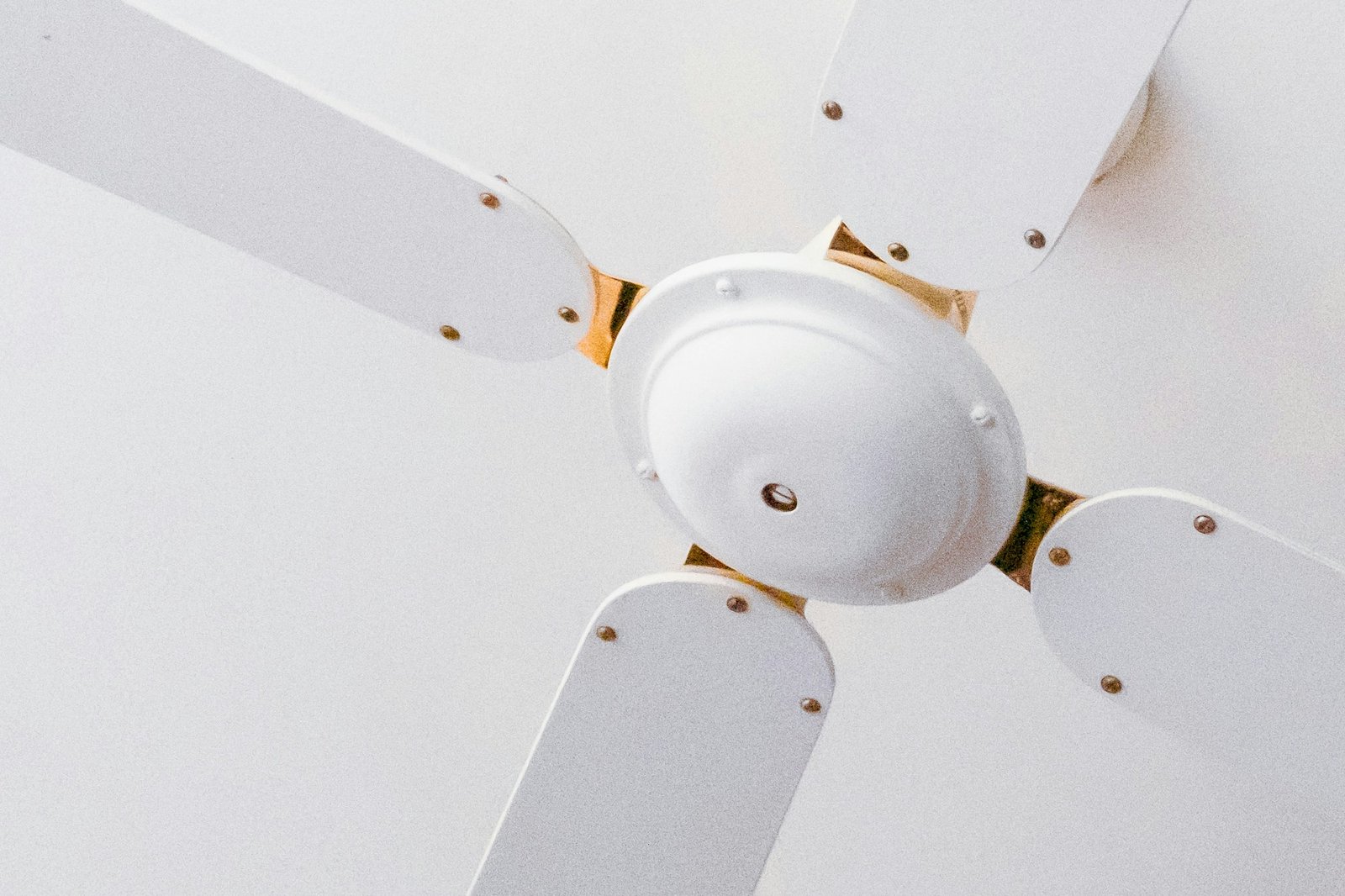
A conventional ceiling fan uses an AC induction motor. It is simple, widely serviced, and typically draws about 70–80 W at top speed for a common 1200 mm model. Speed is usually cut with a wall regulator that wastes some power as heat in older resistor designs.
A BLDC (brushless DC) fan uses a permanent-magnet motor driven by an electronic controller. The same controller handles speed steps, so you do not need a traditional regulator. Published comparative testing of BEE 5-star BLDC 1200 mm fans (VOICE Society, under IS 374:2019) found top-speed power inputs roughly in the 27–35 W range, with air delivery still meeting or beating the 210 m³/min minimum expected for that size. Brand materials commonly cite about 55–65% lower use than a typical induction fan — always confirm wattage on the BEE label.
With no carbon brushes to wear, motor life is often marketed longer; the trade-off is service — a failed controller usually needs authorised parts, not only a local winding shop.
How to read the BEE star label
From 1 January 2023, star labelling became mandatory for ceiling fans sold in India. Stars are awarded on service value: air delivery in cubic metres per minute (CMM, also written m³/min) divided by electrical power input in watts. Higher service value means more air moved per watt.
For the popular 1200 mm sweep, BEE’s published plan (as summarised by manufacturers citing the schedule) uses bands along these lines:
- 1 star: service value about ≥4.0 to <4.5
- 2 star: ≥4.5 to <5.0
- 3 star: ≥5.0 to <5.5
- 4 star: ≥5.5 to <6.0
- 5 star: ≥6.0
BIS-linked performance expectations for 1200 mm fans also point to a minimum air delivery around 210 CMM and a floor service value around 4.0. A 5-star BLDC model often lands near 210–230+ CMM at ~28–35 W — service values in the 6–8+ range in published tests. Prefer the label numbers over marketing “up to 65% savings” alone.
Smaller and larger sweeps use different tables — always match the label to the sweep you are buying.
Sweep size vs room size
Sweep is the diameter of the circle the blade tips trace. In India the common sizes are 900 mm, 1200 mm and 1400 mm (with 600 mm and 1050 mm less common for main rooms). Industry guides converge on a practical planning map:
- 900 mm: compact rooms roughly under ~70–80 sq ft (small study, kitchen annex, child’s room)
- 1200 mm: most bedrooms and compact living rooms, roughly ~80–150 sq ft — the default Indian size
- 1400 mm: larger halls, open living areas, or rooms above ~150–180 sq ft; for long or L-shaped rooms, two 1200 mm fans often beat one oversized fan in the wrong place
Mount so blades sit roughly 7–8 ft above the floor where possible, with clearance below the ceiling. Centre the fan over the usable area — over the bed in a bedroom, not necessarily the geometric centre of an L-shape.
Air delivery (CMM) and RPM
Air delivery in CMM is the volume moved per minute at the rated test. For a 1200 mm fan, treat ~210 CMM as a baseline you should not undercut; many comfortable BLDC models sit a little above that. RPM alone is a weak buying metric: a larger sweep can feel strong at lower RPM. Use CMM + service value together, then listen for noise at the speed you will actually sleep or work under.
Noise, remotes and regulator traps
BLDC motors are usually quieter at comparable airflow when the fan is balanced. Noise still depends on blade design, mounting and the highest speed you use. For bedrooms, prioritise a sleep or low-noise mode.
Most BLDC fans ship with a remote (and sometimes an app). Important wiring note: do not put a classic wall regulator in series with a typical BLDC fan the way you would with an old induction fan. The controller expects full supply voltage; an old regulator can cause flicker, wrong speeds or damage. Bypass or remove the old regulator so the fan gets a switched live, then use the remote (or a BLDC-compatible electronic controller the brand specifies).
On home inverter or solar backup, the lower wattage is a real advantage: a ~30 W fan draws far less from the battery than a ~75 W induction fan, so backup runtime stretches. That matters in cities with frequent cuts as much as the monthly bill does.
Electricity savings in rupees (realistic maths)
Use the label wattage, your daily hours, and your slab tariff. A planning example for one fan:
- Induction ~75 W × 12 hours/day ≈ 0.90 kWh/day ≈ 329 units/year
- BLDC ~30 W × 12 hours/day ≈ 0.36 kWh/day ≈ 131 units/year
- Difference ≈ 198 units/year
At a mid-city slab around ₹7/unit, that is roughly ₹1,400 saved per year per heavily used fan. At ₹6/unit the same hours save about ₹1,200; at ₹8–9/unit (higher slabs in some metros) closer to ₹1,600–₹1,800. Three fans used similarly can save roughly ₹3,500–₹5,000+ a year before you count longer inverter runtime.
Payback depends on the price premium. If a solid 5-star BLDC costs ₹1,500–₹2,500 more than a basic induction fan and you run it 8–12 hours daily, many households recover the premium in about 1–2 years. Occasional-use guest rooms may never justify the upgrade — start with the fan that runs longest.
What BLDC fans cost in India in 2026
Retail prices move with sales, but mid-2026 Amazon.in / Flipkart-style listings for popular 1200 mm remote BLDC models commonly land in these bands (indicative, not a quote for one SKU):
- Entry 5-star BLDC: about ₹2,200–₹3,000 (e.g. volume models from Crompton Energion / Hyperjet lines, Havells REO-class, Atomberg Efficio-class)
- Mid design / higher air delivery: about ₹3,000–₹4,500 (e.g. Renesa-class Atomberg, Nucleoid-class Crompton)
- Smart / underlight / large-sweep premium: about ₹4,500–₹7,500+
- Ordinary induction fans: still often about ₹1,200–₹2,500 for basic 1200 mm units
Check warranty (often 2–5 years on BLDC electronics), spare remote availability, and local authorised service.
A short pre-purchase checklist
- Measure room area; pick 900 / 1200 / 1400 mm sweep (or two fans for long rooms)
- Read BEE stars and the printed service value, wattage and CMM
- For daily-use rooms, prefer 5-star BLDC in the ~28–35 W class at 1200 mm
- Plan wiring: bypass old regulators; use the remote or brand-approved controller
- Prioritise sleep-mode noise for bedrooms; boost/high only for peak afternoon heat
- Estimate payback from your hours × tariff × wattage difference
- Confirm warranty, spare remote availability, and authorised service
Fans sit in the same “does this actually fit my flat?” category as other home upgrades. If you are also cleaning indoor air in the same bedroom, pair the fan choice with a correctly sized air purifier for Indian apartments. For plug-in upgrades that do not need landlord wiring changes, see renter-friendly smart home gadgets. Comfort is not only cooling: layering lamps and small finishing choices from making a room feel finished often matter as much as another appliance.
FAQ
Do BLDC fans work with old wall regulators?
Usually no. Most BLDC fans need a full-voltage switched supply and their own remote or electronic controller. Leaving an old resistor/capacitor regulator in the circuit can cause erratic speed or damage. Have an electrician bypass it.
Is a 5-star fan always a BLDC fan?
Not always — some efficient induction designs can reach high stars — but in practice most 5-star ceiling fans sold in India today use BLDC motors. Trust the service value and wattage on the label more than the motor buzzword alone.
1200 mm or 1400 mm for a living room?
If the room is a typical 10×12–12×12 bedroom-sized living space, 1200 mm is usually enough. For larger or elongated halls, prefer 1400 mm or two well-placed 1200 mm fans rather than one undersized fan in the middle.
Will a BLDC fan cool as well as an AC?
No. A fan moves air and helps sweat evaporate; it does not lower room temperature the way an air conditioner does. In many Indian homes the practical combo is a correctly sized fan for most hours and AC only for peak heat or humidity.
How long until electricity savings cover the extra cost?
For a fan used 8–12 hours daily, a ₹1,500–₹2,500 premium over a basic induction model often pays back in roughly 1–2 years at typical city tariffs. Low-use rooms take longer; start with the longest-running fan in the house.
Bottom line
Pick sweep for the room, then buy on BEE service value, real wattage and noise at the speeds you live with. For daily-use bedrooms and halls in India in 2026, a 5-star BLDC fan in the high-20s to mid-30s of watts is the default sensible upgrade: quieter nights, lighter inverter load, and electricity savings that usually repay the premium within a couple of years. Read the label, fix the regulator wiring, and skip the marketing CMM race that ignores your actual floor plan.