The famous names are not always the best plates. Below, each well-known stop gets a plain verdict, with the local alternative people recommend.
Most Jaipur street food lists give you the same fifteen dishes and the same famous shops, with no sense of which ones are still good, which are just busy, and when to go. This guide is organised by neighbourhood and time of day, so you can eat well around whatever you are already doing in the city, and it gives each famous name an honest verdict: queue for it, go if you are nearby, or skip.
The verdicts are based on recent reviews and local discussion, not our own tasting, and we say whose opinion each one is. Timings and prices come from shop listings and 2026 food guides such as Thela Khojo. Stalls change hours and close on some days, so check before you set out.
Jaipur street food by neighbourhood
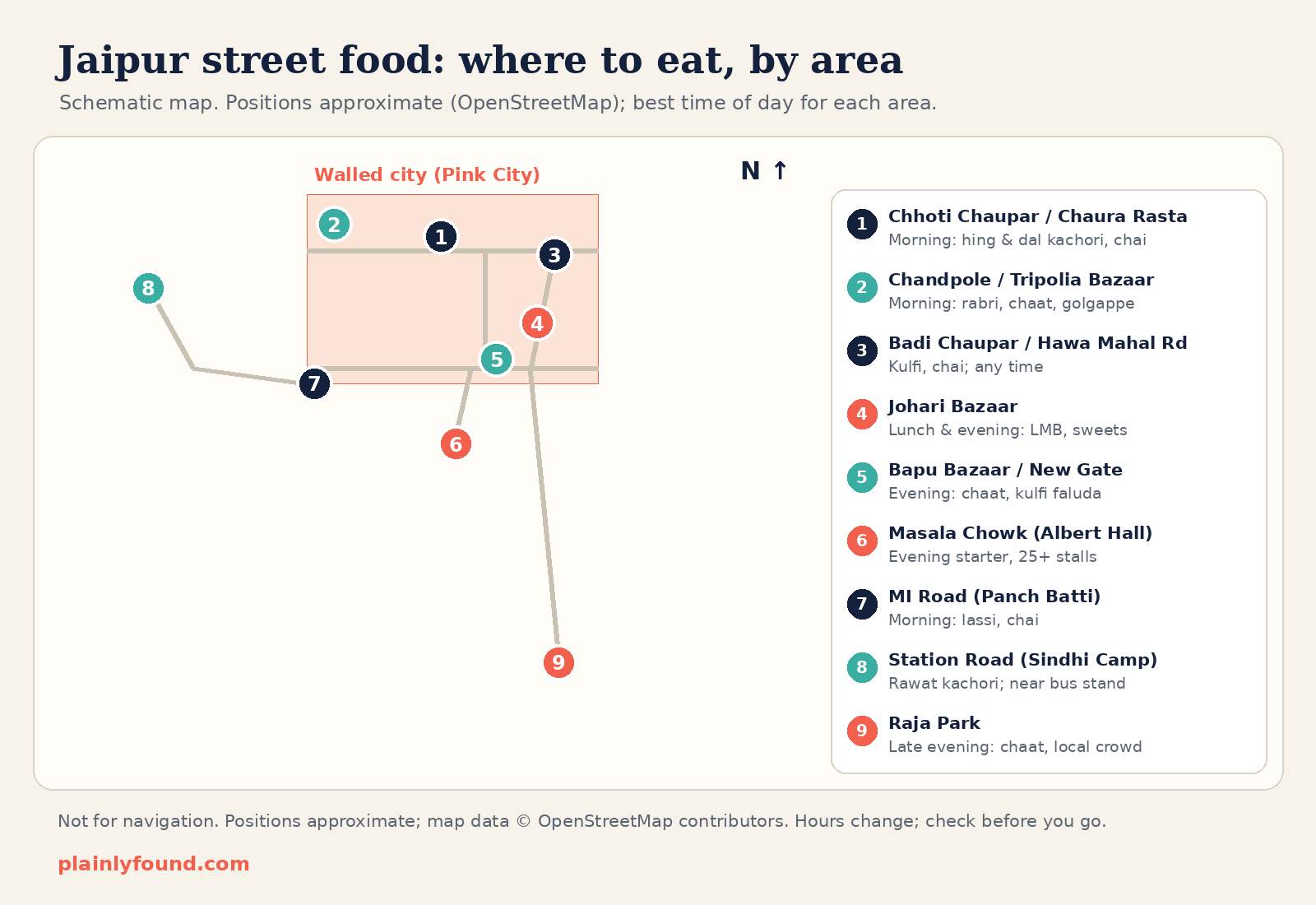
| Area | Go for | Best time |
|---|---|---|
| Chhoti Chaupar and Chaura Rasta | Hing and dal kachori (Puran Ji, Khunteta), Sahu chai | 7:30 to 10:30 am |
| Chandpole and Tripolia Bazaar | Mahaveer Rabri, Ramchandra Chaat, golgappe | Morning |
| Badi Chaupar and Hawa Mahal Road | Pandit Kulfi, chai stalls | Any time, after the monuments |
| Johari Bazaar | LMB for ghevar, mawa kachori and a sit-down thali | Lunch or evening |
| Bapu Bazaar and New Gate | Chaat, kulfi faluda, mirchi vada | 5 to 8 pm |
| Masala Chowk, near Albert Hall | Many famous stalls in one seated space | Evening, 6 to 8 pm |
| MI Road | Lassiwala, Gulab Ji chai | Morning, before stock runs out |
| Station Road, Sindhi Camp | Rawat pyaaz kachori and ghevar | If arriving by bus or train |
| Raja Park | Chaat and snacks where locals eat | Late evening |
Walled city mornings: Chhoti Chaupar, Chaura Rasta and Chandpole
This is where Jaipur eats breakfast. Puran Ji Kachori Wala on Chaura Rasta, running since 1963, is known for khasta hing kachori and dal kachori served with dahi, according to local food bloggers quoted by The Better India. Khunteta Namkeen Bhandar nearby is the pick for spicy aloo kachori and pakodas. Walk west towards Chandpole for Mahaveer Rabri Bhandar, then along Tripolia Bazaar for chaat at Ramchandra Chaat Bhandar and golgappe at Lala Ji. Sahu Chai on Chaura Rasta is the classic chai stop, open until about 11 pm.
Johari Bazaar: sweets and a proper sit-down
Laxmi Misthan Bhandar (LMB) is less a stall than a large, busy sweet shop and restaurant. It is the reliable place for ghevar, mawa kachori, lassi and a full Rajasthani thali (around ₹450 to ₹500 per travell.cc). It is touristy and pricier, but consistent, and it has seating, which matters in the afternoon.
Bapu Bazaar and Masala Chowk: easy evenings
Bapu Bazaar has chaat, kulfi faluda and Falahaar for dahi vada. A short walk south, Masala Chowk in Ram Niwas Garden is a Jaipur Development Authority food court with 25 or more stalls, including branches of well-known names such as Mahaveer Rabri and Gulab Ji Chai. Most guides list entry at ₹10 (one July 2026 guide says ₹13) and hours of roughly 9 or 10 am to 10 pm. It is the easiest start if you are nervous about street stalls: priced menus, seating and toilets. Weekend seats fill after about 7:30 pm.
MI Road, Station Road and Raja Park
MI Road has the famous Lassiwala and Gulab Ji Chaiwala, both best in the morning. Station Road near the Sindhi Camp bus stand is home to Rawat Mishthan Bhandar. Raja Park, south of the old city, is where many residents go for evening chaat and snacks; Thela Khojo lists more of its spots there than in any other area.
The famous names: worth the queue?
These verdicts summarise what recent reviewers and locals say.
| Name | Verdict | Why | Try instead |
|---|---|---|---|
| Rawat, Station Road | Go if you are nearby | Still the best-known pyaaz kachori (about ₹35 to ₹60), but a September 2026 Tripadvisor reviewer called it potato-heavy and less spiced than before, and several Zomato reviewers note that chutney costs extra. | Sodhani or LMB for pyaaz kachori; Puran Ji for hing kachori |
| LMB, Johari Bazaar | Worth it for sweets and lunch | Consistent, seated, good ghevar; pricier than street stalls. | Smaller halwais in Johari and Bapu Bazaar for cheaper ghevar |
| Lassiwala, MI Road | Queue, but only at the original | Thick kulhad lassi for about ₹60 to ₹80, but several shops with near-identical names sit in a row. Guides identify the original as shop 312, with “Kishanlal Govind Narain Agarwal” on the board. It sells out, often by early afternoon. | Lassi at LMB, or Sardar Ji Lassi in Nehru Bazaar |
| Puran Ji, Chaura Rasta | Queue for it, in the morning | A local favourite for hing kachori with dahi. One reviewer preferred Radhe Kachori Wala across the lane on the day they visited, and Thela Khojo shows it closed at times. | Khunteta for aloo kachori |
| Masala Chowk | Go, especially on night one | Not the most authentic, but the easiest sampler with seating. | The old-city stalls the next morning |
| Pandit Kulfi, Hawa Mahal Road | Go if you are nearby | A pleasant stop after the monuments; nothing to cross the city for. | Kulfi faluda in Bapu Bazaar |
For more local picks, Condé Nast Traveller India's round-up of Jaipur kachori, chosen by local food writers adds Sampat Namkeen Bhandar opposite Darbar School, known for aloo kachori made with the potato skins left on.
A morning and an evening crawl
Both fit around our slow one-day Jaipur old city walking route, which starts at Hawa Mahal at 7 am and ends near Albert Hall at dusk.
Morning, about 7:30 to 10 am
- Kachori breakfast at Puran Ji or Khunteta around Chhoti Chaupar and Chaura Rasta. Share one of each kind.
- Rabri at Mahaveer Rabri Bhandar in Chandpole, or chai at Sahu if you would rather not start with sweets.
- Chaat on Tripolia Bazaar on your way back towards the monuments.
Evening, about 5 to 8:30 pm
- Johari Bazaar for ghevar or mawa kachori at LMB, or a small sweet shop.
- Bapu Bazaar for dahi vada, chaat or kulfi faluda.
- Masala Chowk next to Albert Hall for a last plate, or an auto to Raja Park if you want a more local scene.
Dish glossary
- Pyaaz kachori: flaky fried pastry with a spiced onion filling; Jaipur's signature snack.
- Dal, hing and aloo kachori: lentil, asafoetida-heavy, and potato versions; hing kachori is often served with dahi.
- Mawa kachori: a sweet kachori filled with khoya and dry fruit, dipped in sugar syrup. Very rich; share it.
- Mirchi vada: a large green chilli stuffed with spiced potato, battered and fried. Milder than it looks, usually.
- Ghevar: a honeycomb disc of fried batter, often topped with malai or rabri. Traditionally a monsoon and Teej sweet (July to September), though big shops now make it year-round. Prices are usually per kg, about ₹600 to ₹1,000 at LMB depending on the topping, per Jaipur Unveiled.
- Rabri: thickened, sweetened milk, often with jalebi.
- Kulfi faluda: dense frozen milk with vermicelli and rose syrup.
- Kanji vada: lentil fritters in a sour, fermented mustard water; mostly made around Holi.
Hygiene, pacing and money
- Pick high-turnover stalls where food is fried in front of you and the queue is mostly local.
- Eat fried food hot. A kachori that has been sitting for hours is both less safe and less good.
- Be careful with water-based items such as golgappa pani and thin chutneys, especially in summer and the monsoon. Carry your own water bottle.
- Pace yourself. Order one plate to share at each stop; six stops of full portions is too much for most people.
- Go early in hot months. From April to June, eat before 10 am and after 6 pm.
- Pay by UPI where you can, but carry ₹200 to ₹500 in small notes. Some stalls still prefer cash.
- Walk or take an e-rickshaw. Parking inside the walled city is difficult, and most stops are within a couple of kilometres of each other.
- Diet: most walled-city food is vegetarian; ask if you need Jain options.
Packing light for a short trip? Our carry-on backpack guide for 3-day trips helps. Staying longer, our weekend getaways from Jaipur cover Abhaneri, Bhangarh and Pushkar, and for a slower break, here are Jaipur cafes worth the coffee.
FAQ
What is the best time to eat street food in Jaipur?
Mornings, roughly 7:30 to 10:30 am, are for kachori, jalebi, rabri and lassi, when everything is freshly fried and some shops sell out. Evenings, about 5 to 9 pm, are for chaat, golgappe and kulfi. Many stalls slow down between late morning and mid-afternoon.
Is Rawat’s pyaaz kachori worth the queue?
Opinions are split. It is still the most famous name, but recent Tripadvisor and Zomato reviewers and locals on r/jaipur say the quality has slipped and that chutney costs extra. Go if you are near Sindhi Camp or the railway station; otherwise try Sodhani, LMB or a busy old-city stall.
How much does a Jaipur street food crawl cost?
Thela Khojo estimates ₹150 to ₹600 per person for a six-stop old-city crawl. Expect about ₹10 to ₹60 for a kachori depending on the shop, ₹60 to ₹80 for a kulhad lassi and ₹10 to ₹20 for street chai.
Is Masala Chowk worth visiting?
Yes, as a first stop. It is a Jaipur Development Authority food court in Ram Niwas Garden near Albert Hall with 25 or more stalls, seating and toilets. Entry is ₹10 according to most guides (one 2026 guide lists ₹13), and it is open from about 9 or 10 am to 10 pm.
Can I pay by UPI at Jaipur food stalls?
Usually, yes, at the bigger shops, and many small stalls have a QR code too. Carry ₹200 to ₹500 in small notes anyway, because some stalls and Masala Chowk counters still prefer cash.
Bottom line
Plan Jaipur street food by time of day, not by a list: kachori and rabri in the walled city in the morning, sweets and lunch in Johari Bazaar, chaat and kulfi in the evening, with Masala Chowk as an easy first stop. Go to the famous names if they are on your way, but follow the local queues for the best plates.
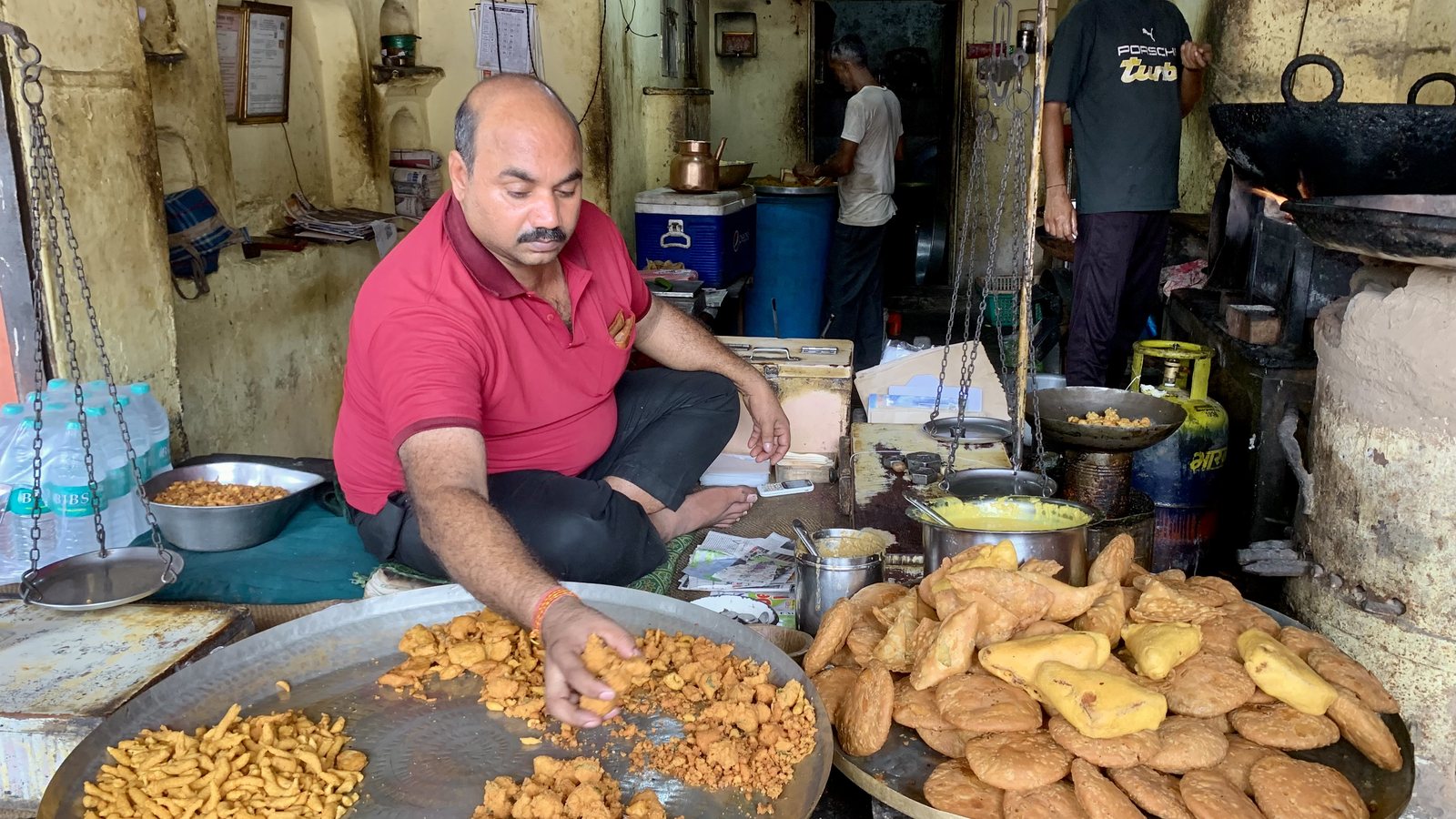
Photo: food vendor frying kachori and mirchi vada in Jaipur, by Dudva, from Wikimedia Commons, released under CC0 (public domain). Prices and hours checked in October 2026 and will change.