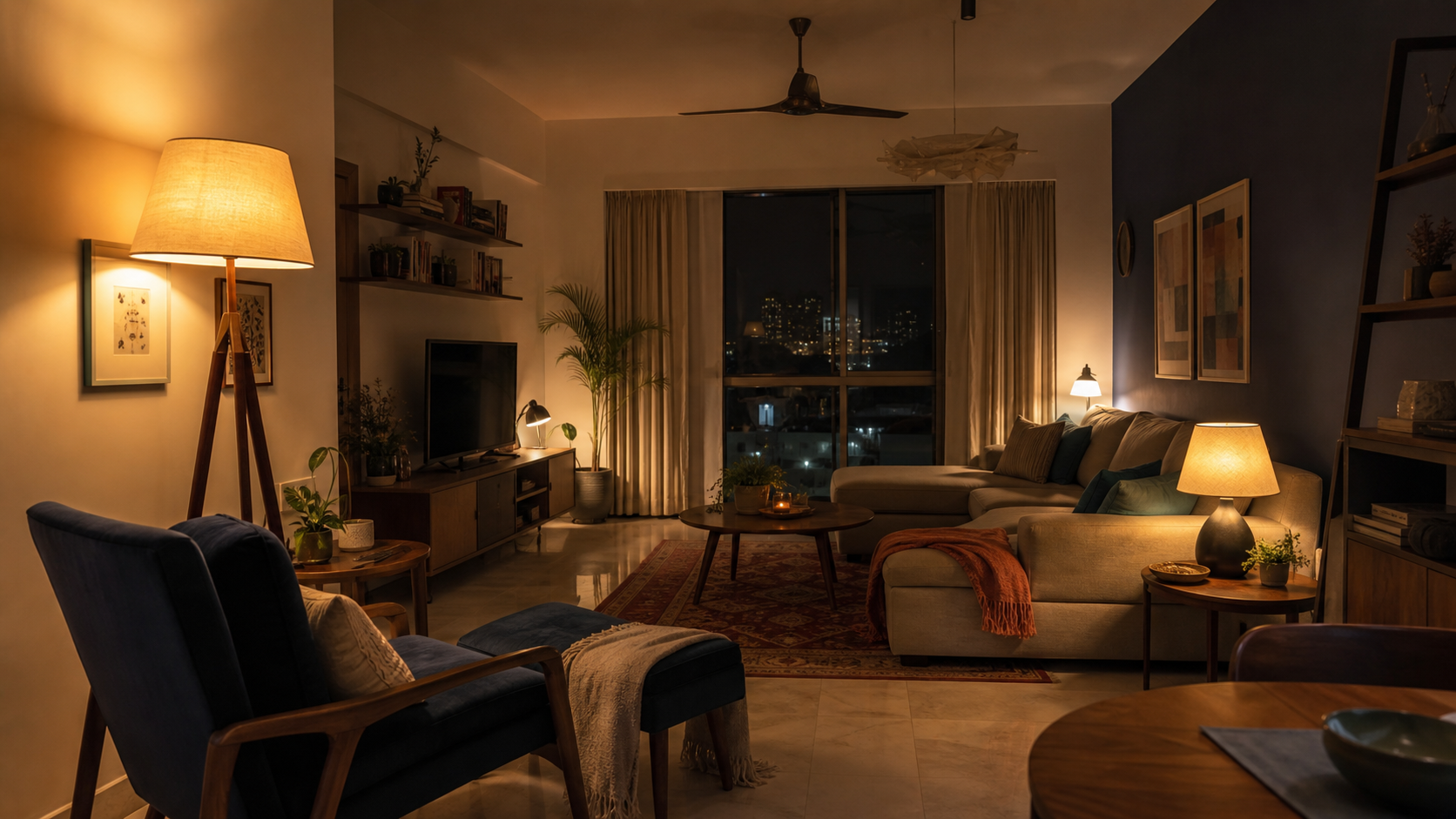
A comfortable room needs background light, focused task light and one quieter accent—not one bulb trying to do everything.
A single bright ceiling light makes a room visible. It rarely makes it comfortable. If your bedroom or living room feels flat, harsh or strangely unfinished, the problem may not be your furniture—it may be that every corner is being lit in exactly the same way.
The short answer: use layers, not one powerful bulb
A pleasant room normally combines three kinds of light: ambient light for moving around, task light for a specific activity and accent light for depth or atmosphere. You do not need an expensive lighting plan. In many homes, one floor lamp, one table lamp and a better-positioned task light can change the room more than another decorative purchase.
1. Ambient lighting: the quiet background
Ambient light is the general layer. It can still come from a ceiling fixture, but it should not have to do every job. Choose diffused fittings, bounce light off a wall or ceiling, or use a shaded floor lamp to create a softer base. For bedrooms and relaxed living areas, warm white light—typically around 2700K to 3000K—usually feels more comfortable than cool white.
2. Task lighting: put light where the work happens
A reading chair needs a lamp aimed toward the page. A desk needs an adjustable lamp that does not reflect in the screen. A kitchen counter benefits from under-cabinet lighting because your body often blocks the ceiling light. Task lighting should be focused, easy to switch on and bright enough for the activity without lighting the entire room.
3. Accent lighting: make the room feel dimensional
Accent light draws attention to a wall, plant, shelf, artwork or architectural detail. A small lamp on a console, a wall washer behind a plant or a discreet LED strip beneath a shelf can create depth. Keep it restrained: the goal is to guide the eye, not make every object compete for attention.
Five useful types of lamps
- Floor lamp: useful beside a sofa, reading chair or empty corner; choose an uplighter for soft ambient light or an adjustable arm for reading.
- Table lamp: ideal for bedside tables, sideboards and consoles; the shade should hide the bare bulb at normal eye level.
- Desk lamp: look for an adjustable neck, a stable base and a head that keeps glare away from your screen.
- Wall sconce: saves floor and table space and works well beside beds, mirrors or in narrow passages.
- Portable rechargeable lamp: useful where there is no convenient socket, but check real battery life and whether the battery can be replaced.
A simple room-by-room plan
Living room
Start with a shaded floor lamp near the main seating area. Add a small table lamp across the room so all the light does not come from one side. Use the ceiling light when cleaning or hosting a larger group, not automatically every evening.
Bedroom
Use warm bedside lamps or wall-mounted reading lights with independent switches. If you share the room, directional lamps let one person read without flooding the whole space. Avoid exposed cool-white bulbs close to the bed.
Work desk
Place the lamp on the opposite side of your writing hand to reduce shadows. Keep the monitor from becoming the brightest object in a dark room: a soft lamp behind or beside the screen reduces the contrast your eyes must constantly manage.
Common mistakes to avoid
- Buying a decorative lamp before checking its height, shade and actual light direction.
- Mixing very cool and very warm bulbs in the same sightline.
- Using exposed high-lumen bulbs that create glare at eye level.
- Adding LED strips everywhere instead of deciding what deserves emphasis.
- Ignoring switch placement and then rarely using the lamp because it is inconvenient.
What to buy first
If you are starting from one overhead light, buy one good lamp for the activity you do most often. That might be a reading lamp, a desk lamp or a bedside lamp. Live with it for a week, notice where the room still feels dark or flat, and add the second layer deliberately. Better lighting is not about owning more fixtures; it is about putting the right light in the right place.
Keep reading: How to Make a Room Feel Finished Without Buying More Furniture.