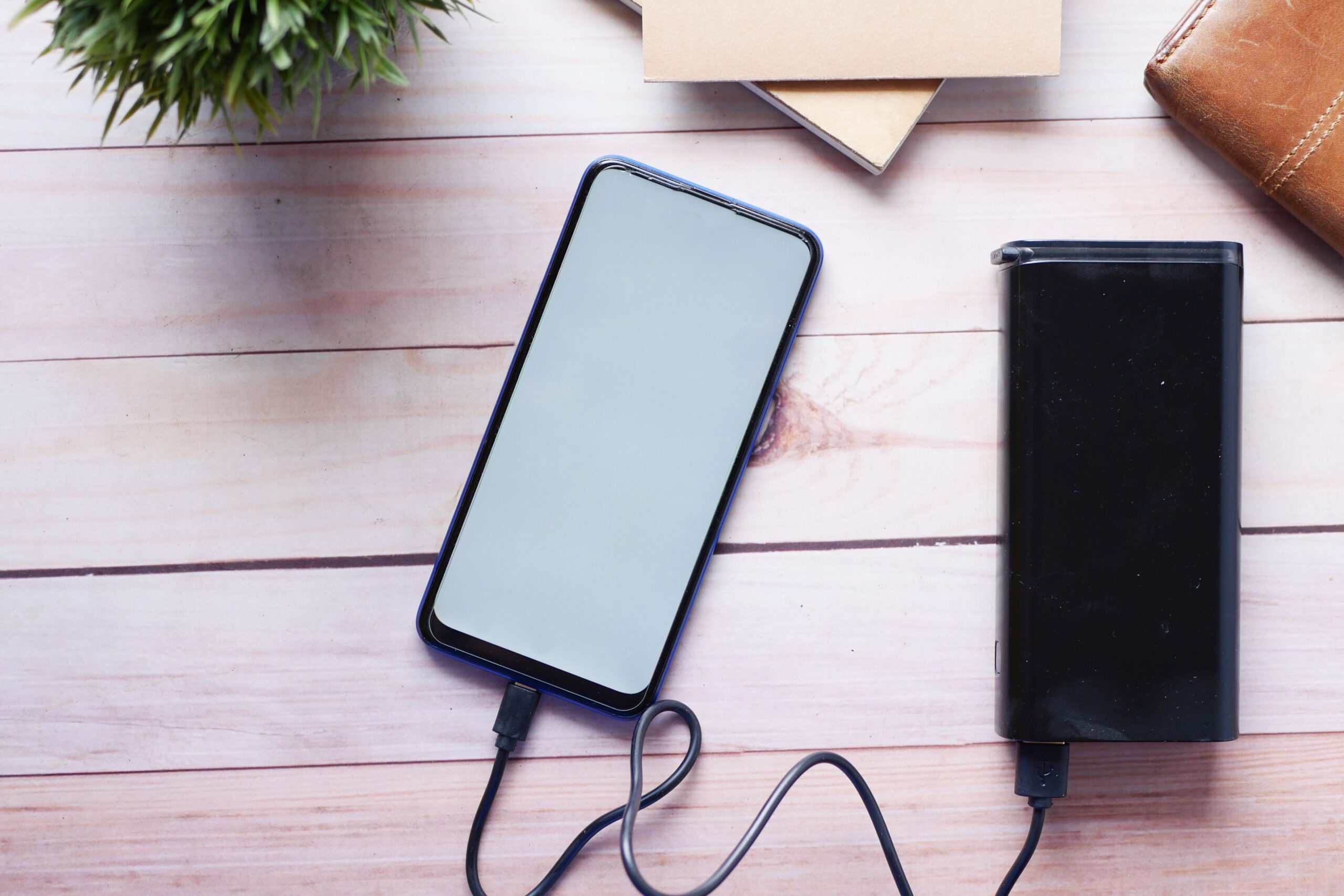
A power bank sized for your laptop is overkill and dead weight if you’re only ever charging a phone.
Power bank listings lead with one number — milliamp-hours (mAh) — as though it’s the only thing that matters. It isn’t. Two power banks with identical mAh ratings can charge at completely different speeds, work with completely different devices, and weigh completely different amounts. The right power bank is the one sized and specced for what you actually carry, not the one with the biggest capacity number.
Start with what you’re charging, not how much power you want
A phone battery is typically in the 3,000–5,000mAh range. A laptop can need 50,000mAh or more to fully recharge, if it can be charged by a power bank at all — many laptops need a specific wattage that smaller banks simply can’t deliver. Before comparing capacity, check the two numbers that actually determine whether a power bank will work for your device: its maximum output wattage, and whether it supports the charging standard your device needs (most modern phones and laptops use USB-C Power Delivery, commonly written as USB-PD).
Real-world capacity is lower than the number on the box
Power banks lose 10–30% of their stated capacity to heat and conversion loss during charging. A 20,000mAh power bank will typically deliver closer to 14,000–16,000mAh of usable charge. Build this into your calculation rather than assuming the full number is available — it’s the most common reason people end up disappointed with a power bank that “should” have lasted longer.
Match capacity to your actual day, not your worst-case day
If your day away from a socket usually means one phone recharge, a compact 10,000mAh bank is enough and considerably lighter to carry than a 20,000 or 30,000mAh option. Reserve the larger capacities for genuinely long stretches without power — multi-day trips, festivals, long flights — where the extra weight is worth the extra charge.
Check pass-through and multiple-device charging separately
If you plan to charge more than one device at once, confirm the power bank’s total output is split sensibly across ports, not just listed as a single maximum figure. Some budget power banks list an impressive top wattage that only applies to a single port at a time, dropping significantly the moment a second device is plugged in.
Common mistakes to avoid
- Buying by mAh alone without checking output wattage or charging standard compatibility.
- Assuming a power bank can charge a laptop just because it’s “high capacity” — check wattage requirements specifically.
- Carrying a 20,000mAh+ bank for typical one-phone, one-day use, when a smaller bank would do the job at a fraction of the weight.
- Ignoring charge time for the power bank itself — some large-capacity banks take many hours to refill.
What to check before you buy
Look up your specific device’s charging wattage requirement, then find a power bank whose output wattage meets or exceeds it. Everything else — capacity, size, price — should be chosen around that number, not before it.
Keep reading: The Practical Carry-On Packing List: What You Really Need.