A mixer grinder can be the most-used appliance in an Indian kitchen—or an expensive machine that is too noisy, too bulky and frustrating to clean. The difference is rarely the number printed on the box. It comes down to what you grind, how much you make, whether the jars suit those jobs and whether service is available when a coupler or gasket eventually wears out.
For most small households, a reliable 750-watt mixer grinder with three genuinely useful jars is the sensible middle ground. A lower-powered model can be enough for light blending; a more powerful one may help with frequent, heavy grinding. Neither is automatically “better.”
The short buying checklist
- Match the motor to the work: occasional chutney and shakes need less than frequent dosa batter, coconut and masala grinding.
- Choose jars by useful capacity: a small chutney jar, a medium dry/wet jar and a larger liquidising jar cover most homes.
- Look for overload protection: it helps protect the motor when the jar is overfilled or the mixture is too thick.
- Check local service and spare parts: jars, blades, gaskets and couplers matter more after year two than an extra accessory on day one.
- Buy for your counter: measure height, base width and cable reach before ordering.
How much power do you actually need?
Wattage describes electrical input, not the complete quality of the appliance. Blade design, motor build, jar shape and how you load it all affect real performance. Treat wattage as a useful filter, not a score.
Around 500 watts can suit a one- or two-person home that mainly makes smoothies, chutneys, soft pastes and small quantities of dry masala. It may need shorter batches and more pauses with tougher ingredients.
Around 750 watts is the practical all-round range for many Indian homes. It usually gives you more headroom for soaked dal, coconut, ginger-garlic paste and routine dry grinding without moving into an unnecessarily large appliance.
900 watts and above makes sense when heavy grinding is frequent, quantities are larger or the manufacturer has paired that motor with robust jars and blades. More power can also mean more noise, weight and cost. Do not pay for it unless your cooking requires it.
The jars matter more than the accessory count
A “five-jar” package is not automatically more useful than a well-designed three-jar set. Think in jobs:
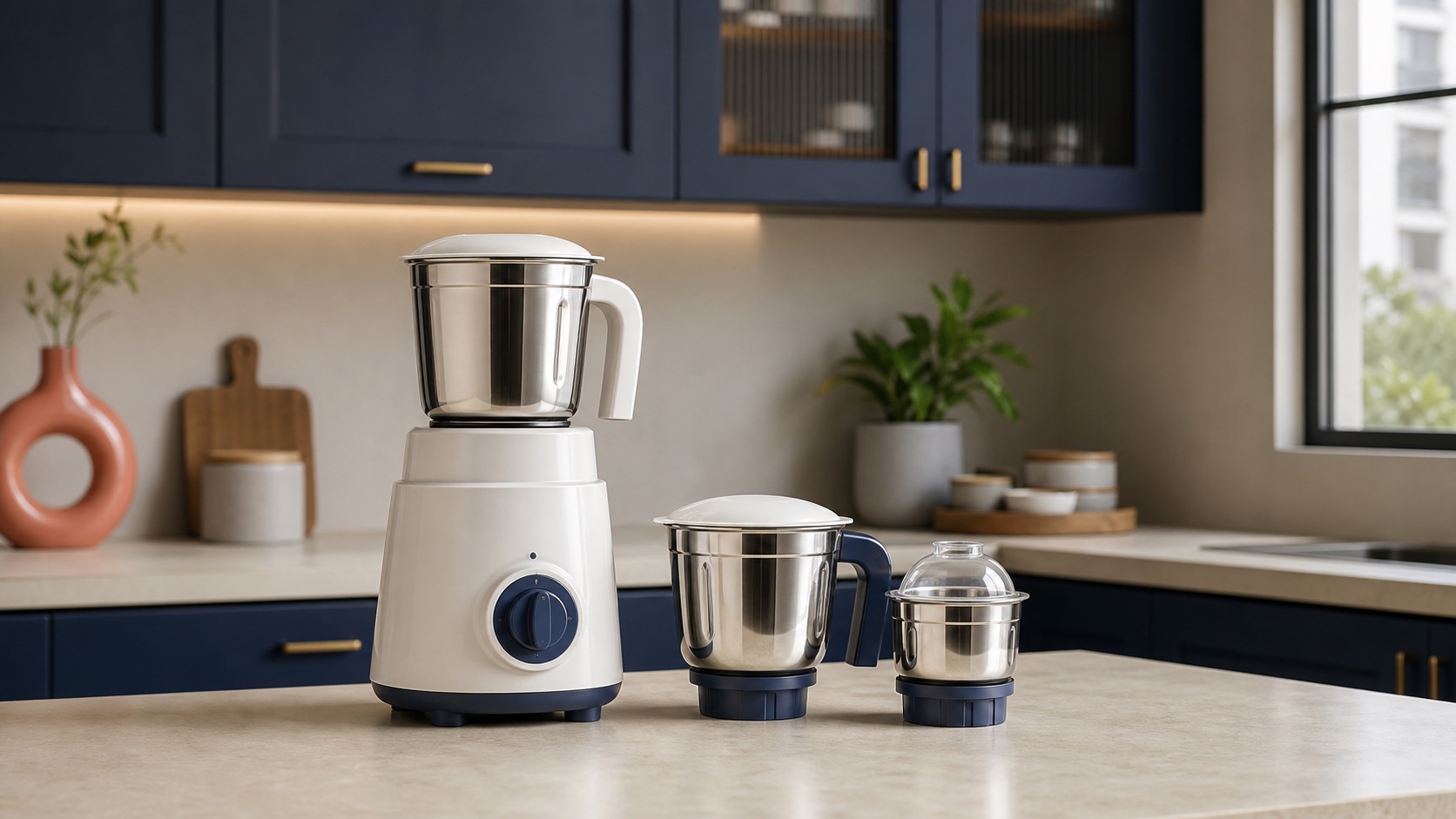
- Small chutney jar: important for small quantities of chutney, spice and ginger-garlic paste. A jar that is too wide can leave ingredients below the blade.
- Medium grinding jar: the everyday jar for wet masala, coconut, soaked lentils and medium batches.
- Large liquidising jar: useful for lassi, shakes, soups and larger wet mixtures. Check the working capacity, not only the total volume.
Juicer attachments, food-processing bowls and special blades can be worthwhile, but only if they replace another appliance you would otherwise buy. Every extra part needs storage and cleaning.
Features worth paying for
Overload protection
Thick batter, too little liquid or an overfilled jar can strain the motor. A resettable overload protector is a useful safeguard. It does not make overloading harmless; you still need to follow the manufacturer’s batch limits and rest times.
Stable feet and a secure jar lock
The base should not walk across the counter during grinding. Firm rubber feet, a stable jar seating and a lid you can hold safely matter more than decorative finishes.
Pulse control
A pulse setting gives better control for coarse masala, chopped nuts and mixtures you do not want to turn into a smooth paste. Three speeds plus pulse is enough for most kitchens.
Replaceable wear parts
Gaskets, blades and couplers wear before the motor in many machines. Before buying, search the brand’s official service network and check whether replacement jars and common parts are sold in India.
What you can safely ignore
- Huge accessory counts: they create value only when you will use them.
- “Silent” language: mixer grinders are noisy. Compare credible noise information where available, but expect sound during hard grinding.
- Looks alone: a beautiful appliance that cannot grind a small chutney batch is still the wrong appliance.
- Peak performance claims without context: continuous run time, jar limits and rest intervals matter too.
If you are setting up a new home, place the mixer grinder in the wider first-kitchen essentials checklist before deciding whether it deserves part of your initial budget.
Questions to answer before you buy
- How many people do you cook for?
- Do you regularly grind coconut, dosa batter or hard spices?
- What is the smallest quantity you need the chutney jar to handle?
- Will the appliance stay on the counter or be lifted from a cabinet?
- Is authorised service available in your city?
- Can you buy a replacement jar, lid, gasket and coupler?
Our practical recommendation
Do not start with a brand name. Start with your hardest weekly task. For a typical two- to four-person home that makes chutney, masala, shakes and occasional batter, shortlist dependable 750-watt models with three stainless-steel jars, overload protection, stable feet and service nearby.
If your needs are lighter, save the money and counter space with a simpler machine. If heavy wet grinding is central to your cooking, compare a higher-powered mixer grinder with a dedicated wet grinder before assuming one appliance should do everything.
The best mixer grinder is not the model with the loudest specification sheet. It is the one whose jar sizes match your food, whose parts you can replace and whose routine cleaning you will not resent.