Setting up your first kitchen is exciting until every shop, relative and online checklist tells you that you need fifty things before you can cook one meal.
You do not need a matching cookware set, six appliances or a drawer full of specialised tools on day one. You need a small group of dependable basics that match the food you actually cook, the storage you actually have and the number of people you feed.
This first-kitchen checklist is designed for Indian apartments, including compact rental kitchens where pressure cookers, tawas, kadais, masalas and everyday staples all compete for limited space. Start with the essentials, live with the kitchen for a few weeks, and add the rest only when a real need appears.
The short answer: your minimum viable kitchen
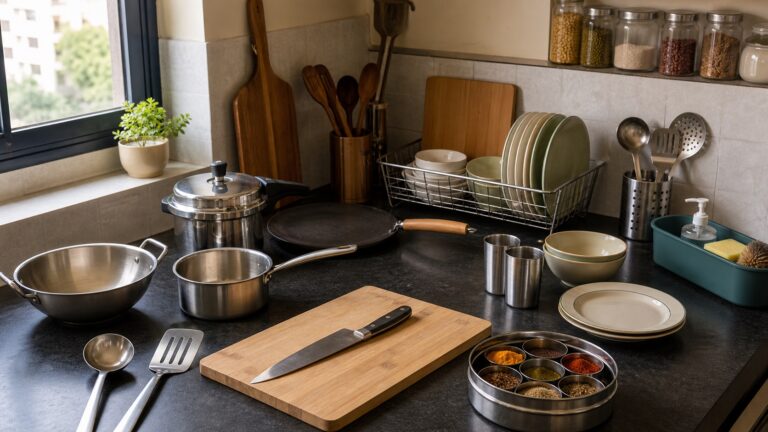
If you need to set up the kitchen this weekend, begin with this compact list:
- One pressure cooker or deep saucepan
- One medium kadai or frying pan
- One tawa, if rotis, dosas or cheelas are part of your routine
- One good kitchen knife and one cutting board
- A spatula, ladle, serving spoon and pair of tongs
- A colander and two mixing bowls
- Two place settings per person, plus two for guests
- Six to ten food-storage containers in useful sizes
- Dishwashing supplies, drying space and a covered waste bin
That is enough to prepare ordinary breakfasts, dals, rice, sabzis, rotis, one-pot meals and reheated leftovers. Everything else can be added after you understand your cooking habits.
Before buying anything, answer five questions
1. What do you cook most often?
A person who makes rotis every day needs a tawa, chakla and belan sooner than someone who mainly cooks rice bowls and pasta. A mixer-grinder may be essential for chutneys and masalas but unnecessary for someone who rarely uses them. Build your kitchen around your real weekly menu—not an idealised version of yourself.
2. How much storage and counter space do you have?
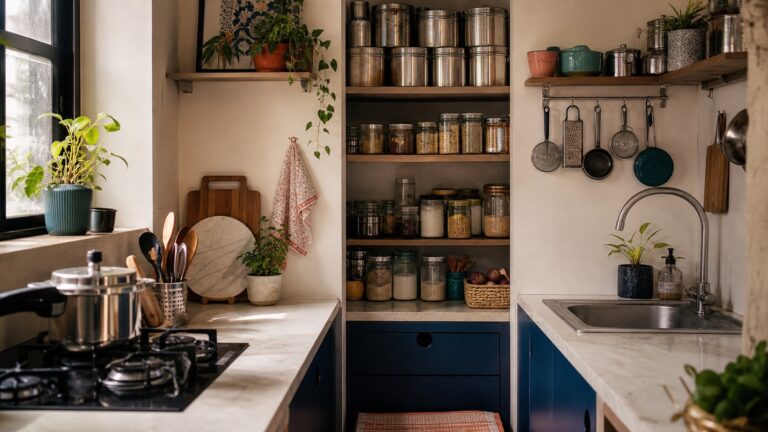
Measure shelves, drawers and the space below the counter before ordering racks or large container sets. In a compact kitchen, every item needs a home. If an appliance will permanently occupy half the worktop, it should earn that space through frequent use.
3. What is already included?
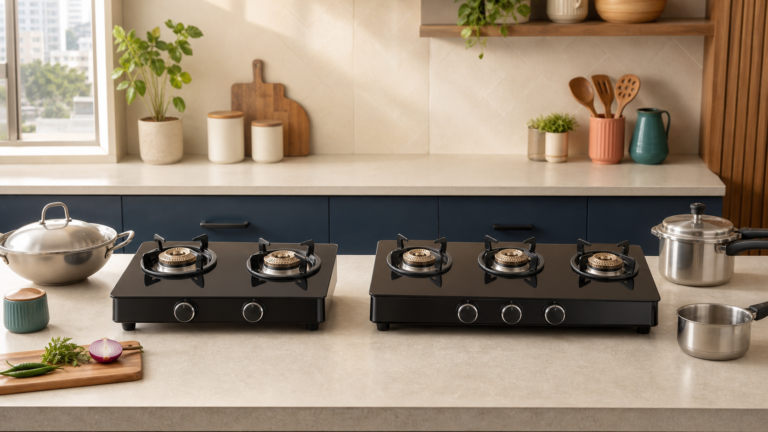
Rental apartments may already include a cooktop, chimney, water purifier or microwave. Check what works, what the landlord maintains and what you are allowed to replace before buying duplicates.
4. How many people will you feed?
Buy for your household plus two visitors, not for a hypothetical dinner party of twelve. Extra plates and giant vessels take up space every day even when they are used twice a year.
5. What is your starting budget?
Spend more on items that affect daily cooking and last for years: a stable pressure cooker, a comfortable knife, dependable cookware and a sturdy cutting board. Save on simple tools such as measuring spoons, peelers and basic storage baskets. Keep part of the budget unspent until you have used the kitchen for a month.
Buy before moving in: the true essentials
Cookware
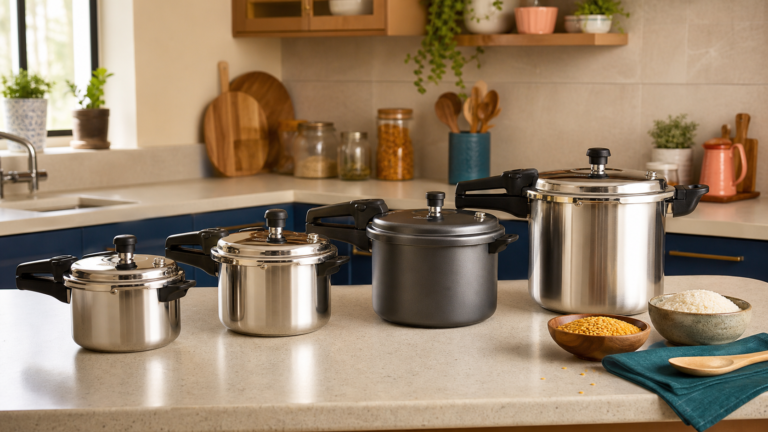
- Pressure cooker: A 3-litre cooker suits one or two people; larger households or batch cooks may prefer 5 litres. Choose a size based on portions, not discounts.
- Medium kadai: Useful for sabzi, curries, shallow frying and one-pot meals. Stainless steel is versatile; other materials can be added when you know what you prefer.
- Tawa: Buy one if flatbreads, dosas, cheelas or toast are routine foods. A separate dosa tawa can wait unless you make dosas frequently.
- Small saucepan: Handy for tea, milk, sauces, noodles, boiling eggs and reheating small portions.
Avoid a large pre-packed cookware set. Sets often include sizes you will not use while missing the one vessel you need every morning.
Preparation tools
- One 20–25 cm chef’s knife that feels comfortable in your hand
- One smaller utility or paring knife
- One large, stable cutting board
- Vegetable peeler and simple grater
- Colander for washing rice, dals, vegetables and fruit
- Two nesting mixing bowls
- Measuring cups and spoons if you bake or follow recipes closely
Skip the twelve-piece knife block. Most home cooks repeatedly use one main knife and one small knife. Two knives that stay sharp are more useful than ten poor ones.
Cooking utensils
- Flat spatula for the tawa and pan
- Deep ladle for dal and curry
- Solid serving spoon
- Kitchen tongs or chimta
- Whisk, only if your usual recipes need one
Match utensils to cookware. Metal tools can damage some coated surfaces, while flimsy plastic tools may not handle high heat well. When in doubt, use sturdy wooden or silicone tools with coated cookware and suitable metal tools with uncoated steel vessels.
Eating and serving
- Two dinner plates per person
- Two bowls or katoris per person
- Two glasses or steel tumblers per person
- Cutlery for the household plus two guests
- Two mugs if tea or coffee is part of your routine
- One medium serving bowl and one tray
Choose stackable shapes and replaceable designs. A practical set that fits the cupboard is better than fragile tableware you are afraid to use.
Food storage
- Four to six small containers for spices, leftovers and chopped ingredients
- Four medium containers for dals, rice, atta or frequently used staples
- One masala dabba or a compact spice system
- Labels and a marker, especially for similar-looking grains and flours
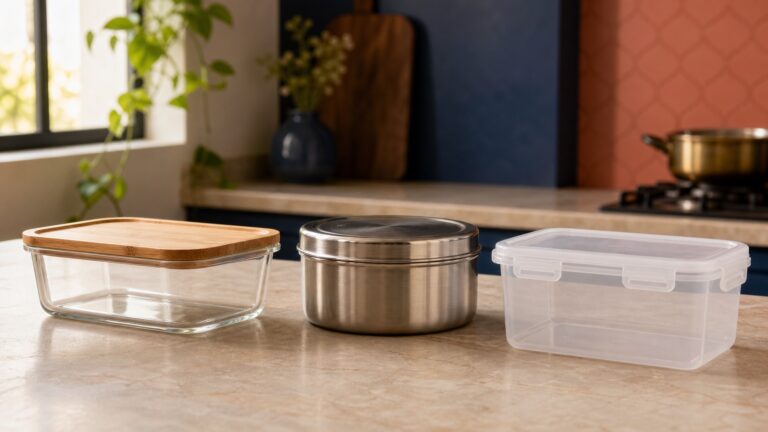
Do not buy a 24-piece container set before measuring the shelves. Start small, then add sizes based on the groceries you genuinely keep. Our next guide will compare glass, stainless-steel and plastic food containers in detail.
Cleaning and waste
- Dishwashing liquid or bar and two scrubbers
- Drying rack or draining mat
- Two absorbent kitchen cloths and two cleaning cloths
- Covered waste bin and appropriately sized liners
- Small brush, dustpan and kitchen-safe surface cleaner
- Cleaning gloves if your skin is sensitive or you prefer using them
Plan where wet cloths and scrubbers will dry. A kitchen can own every cleaning product and still smell damp if nothing dries properly.
Buy during the first month
After a few weeks, the kitchen will tell you what it is missing. These items are useful for many households, but they do not all need to arrive on day one.
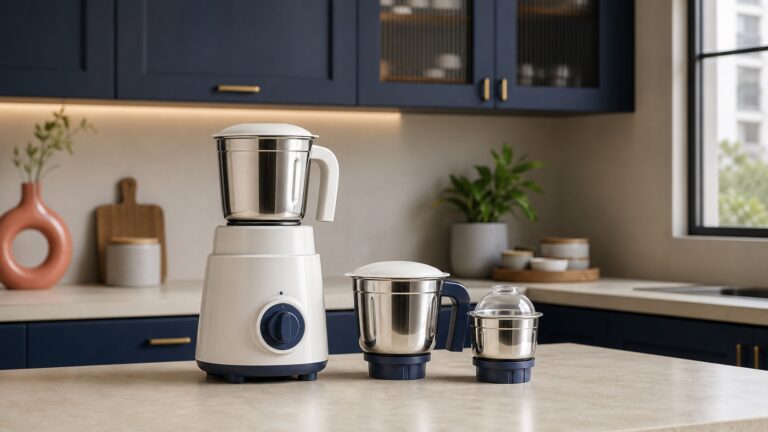
- Mixer-grinder: Move it up the list if you regularly make chutneys, masala pastes, batters or smoothies.
- Chakla and belan: Essential for frequent roti makers; unnecessary for households that buy rotis or rarely prepare them.
- Tadka pan: Convenient, but a small saucepan can handle the job initially.
- Additional storage: Add containers only after seeing which packet sizes and staples you repeatedly buy.
- Second cutting board: Useful for separating strong-smelling ingredients or different food-preparation tasks.
- Kitchen scissors: Worth buying if you frequently open packets, trim herbs or prepare food with them.
- Shelf risers or drawer organisers: Measure first and buy only where they solve a specific storage problem.
Nice-to-have appliances: let your routine decide
Small appliances are where first kitchens become expensive and crowded. An appliance is worth buying when it performs a frequent task noticeably better—not because it appeared in a viral video.
- Electric kettle: Useful for tea, coffee and quick hot water, especially in shared homes or rooms with limited cooking access.
- Microwave: Valuable for households that reheat food often. Less essential if you cook fresh and reheat easily on the stove.
- Air fryer: Consider it only if its capacity suits your household and you expect to use it several times a week.
- OTG: Better suited to people who genuinely bake, toast or grill regularly.
- Rice cooker: Convenient for frequent rice eaters or anyone who wants hands-off cooking.
- Hand blender: Compact and helpful for soups, sauces and some batters, but not a universal replacement for a mixer-grinder.
- Toaster or sandwich maker: Buy only if toast or grilled sandwiches are part of the weekly routine.
Before ordering any appliance, decide where it will live, where it will plug in and how it will be cleaned. If there is no sensible answer, wait.
What most first kitchens can skip
- Large matching cookware sets with duplicate sizes
- Knife blocks containing tools you cannot identify
- Oversized dinner sets bought for occasional guests
- Single-use cutters for eggs, apples, avocados or one specific vegetable
- Bulk container sets that do not fit your shelves or grocery quantities
- Countertop organisers purchased before deciding the kitchen layout
- Multiple appliances that perform nearly the same task
- Decorative jars that are difficult to open, wash or stack
The cheapest unnecessary item is still wasted money, and the most attractive organiser is useless if it makes the counter harder to clean.
A sensible way to divide your starting budget
Prices change constantly, so a percentage-based plan is more useful than a fixed shopping total:
- 55–60%: cookware, knives and everyday preparation tools
- 15–20%: plates, bowls, glasses and cutlery
- 10–15%: storage and organisation
- 5–10%: cleaning and waste management
- 10–15% reserve: items you discover you need during the first month
If an appliance is essential to your cooking style, budget for it separately rather than sacrificing every basic tool to afford it.
Printable first-kitchen checklist
| Buy before moving in | Buy after a few weeks | Only if your routine needs it |
|---|---|---|
| Pressure cooker or deep saucepan | Mixer-grinder | Air fryer |
| Medium kadai | Chakla and belan | OTG |
| Tawa, if used regularly | Tadka pan | Microwave |
| Two useful knives | Second cutting board | Rice cooker |
| Cutting board and colander | Kitchen scissors | Electric kettle |
| Spatula, ladle, spoon and tongs | Extra storage containers | Sandwich maker |
| Basic tableware | Measured shelf organisers | Speciality baking tools |
| Six to ten storage containers | Serving dishes | Single-purpose gadgets |
| Dishwashing and waste supplies | Additional cookware | Large dinner sets |
Frequently asked questions
How many utensils does one person need?
For one person, two plates, two bowls, two glasses, two mugs and two sets of cutlery are usually enough, plus two extra place settings for visitors. Increase quantities when you entertain frequently or do not wash dishes every day.
Which appliance should I buy first?
There is no universal answer. A mixer-grinder is often valuable in Indian cooking, but an electric kettle may matter more in a hostel-style setup, while a microwave may be the priority for someone who meal-preps. Buy the appliance that supports a task you already perform several times a week.
Should I buy everything online?
No. Online shopping is useful for comparing specifications, sizes and reviews, but knives, pressure cookers and heavy cookware can be worth handling in person. Local shops may also make replacement parts and exchanges easier. Compare the complete value, not only the displayed discount.
What should I prioritise in a very small kitchen?
Choose nesting bowls, stackable containers and multipurpose cookware. Keep counters mostly clear and avoid buying organisers until you have measured the available space. Items used daily should be easiest to reach; occasional tools can live higher or deeper in storage.
Start small and improve the kitchen you actually use
A well-equipped first kitchen is not the one with the most products. It is the one where everyday cooking feels straightforward, tools are easy to find and cleaning does not become a second project.
Buy the minimum viable kitchen first. Cook in it for a month. Notice what slows you down, what stays untouched and what you borrow repeatedly. Those observations will produce a better kitchen than any one-size-fits-all shopping list.