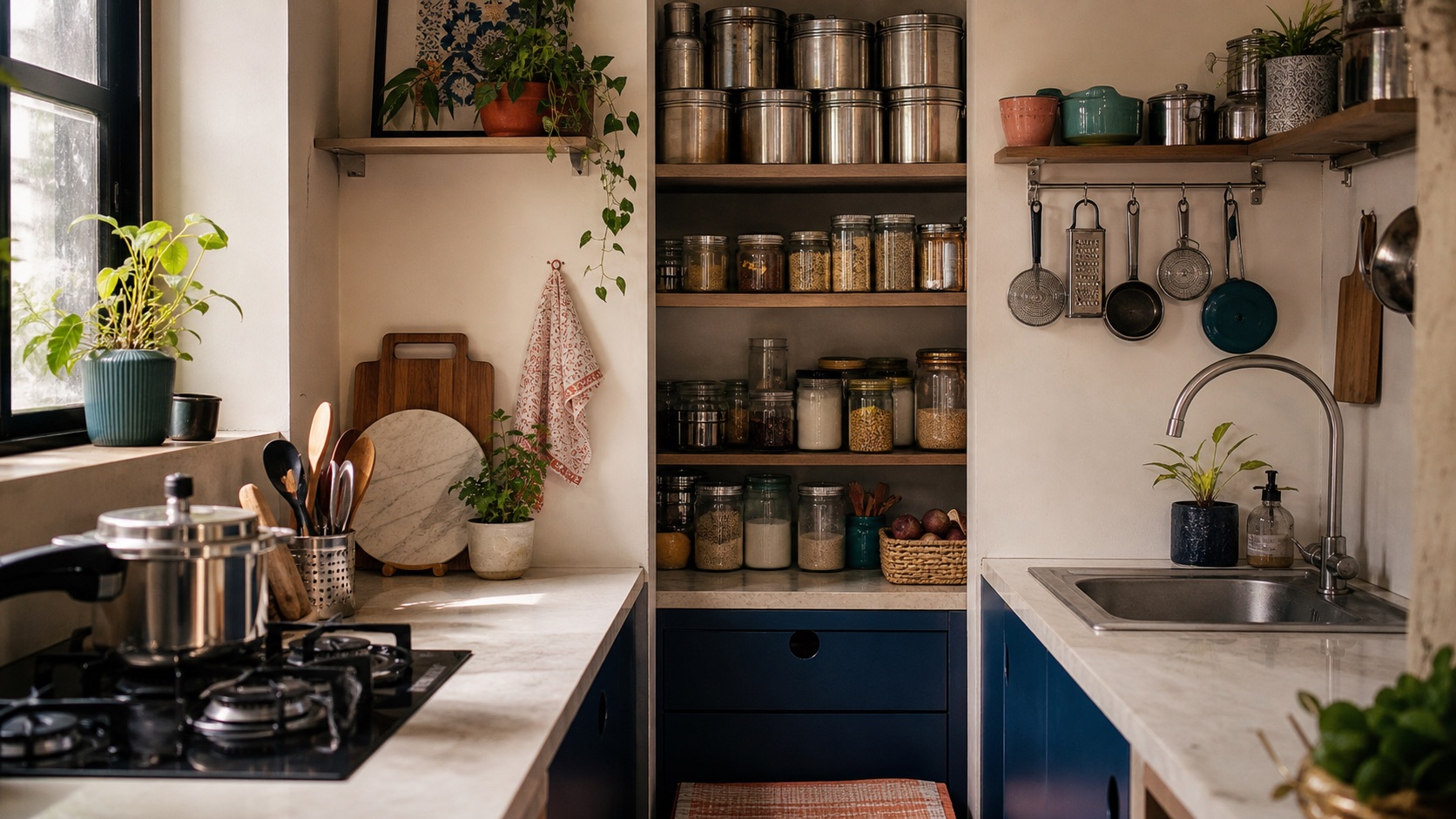
A small kitchen does not always have a storage problem. Often, it has a visibility problem: everyday tools are buried behind rarely used appliances, five open packets occupy the same shelf and the things needed for one task live in four different places.
Before buying racks, jars or drawer organisers, reset the kitchen around how you actually cook. The goal is not an empty, showroom-perfect counter. It is a kitchen where breakfast, chai and dinner take fewer movements.
Start with a no-shopping reset
Choose one cabinet or one stretch of counter—not the entire kitchen. Empty it, wipe it and sort every item into four groups:
- Daily: used almost every day.
- Weekly: used often, but not constantly.
- Occasional: festival cookware, baking tools and serving pieces.
- Leave the kitchen: duplicates, broken pieces and appliances you do not use.
Put the daily group back first. That simple order stops occasional items from taking the easiest shelves.
Create zones around real tasks
Organise by activity, not by how a shop displays products. A small Indian kitchen usually benefits from these zones:
Chai and breakfast zone
Keep tea, coffee, sugar, mugs, a small saucepan and the everyday strainer near the kettle or hob. If breakfast includes poha, oats or cereal, place those nearby too.
Everyday cooking zone
Place the kadai, tawa, pressure cooker and most-used spoons close to the hob. Store oil and the daily masala box within easy reach but away from direct heat.
Preparation zone
Keep knives, peelers, cutting boards, mixing bowls and the colander near the clearest piece of counter. This is where vegetables should arrive, be washed and get prepared.
Cleaning zone
Dish soap, scrubbers, cleaning cloths and waste bags belong near the sink. Keep only the current supplies here; bulk refills can live elsewhere.
Use the easiest space for the most-used items
The area between knee and eye level is premium space. Give it to daily plates, glasses, masalas and cookware. Heavy appliances should sit low enough to lift safely. Occasional and lightweight objects can go on higher shelves.
Do not put the mixer grinder on top of a cabinet if that makes using it a project. An appliance that is hard to reach often becomes an appliance you stop using.
Fix packets before buying containers
Packets create visual clutter because they slump, hide behind one another and are difficult to stack. But transferring every ingredient into a matching jar can be expensive and waste space.
Begin with the ingredients you use frequently or buy in large quantities: atta, rice, the main dals, sugar and everyday snacks. Give those dependable containers. Group smaller refill packets upright in an existing basket, tray or cardboard box. Label the front so nothing disappears at the back.
Do not decant an ingredient unless the container closes properly and you can preserve any cooking or expiry information you need.
Reduce duplicates by choosing a working set
Most homes need more than one kadai or saucepan, but not every inherited, gifted or promotional piece needs daily cabinet space. Choose the best working set and move the rest to occasional storage.
A practical starting set might include:
- one everyday pressure cooker;
- one tawa;
- one medium kadai;
- one small and one medium saucepan;
- one good knife and one small utility knife;
- enough plates, bowls, glasses and cutlery for the household plus a few guests.
Keep what genuinely earns its space. “Maybe someday” is not a daily-use category.
Use doors and walls carefully
Hooks can help with lightweight strainers, measuring spoons and cloths, but avoid turning every wall into storage. Anything near the hob will collect grease. Anything mounted on a cabinet door must not prevent the door from closing or overload the hinges.
Use vertical solutions only where they remove a real obstruction. A rail that clears the preparation counter is useful; a decorative rack that holds rarely used tools is just clutter at eye level.
Keep the counter deliberately incomplete
A functional counter can hold the tools you use every day. It should also leave one uninterrupted working area. If the water filter, microwave and appliances consume every surface, decide which movable appliance is used least and give it a nearby cabinet home.
A tray can visually group oil, salt and daily seasonings, but it does not make unnecessary items necessary. Edit first; contain second.
If loose packets are part of the problem, compare glass, steel and plastic storage containers by their actual use before buying a matching set.
Only then decide what storage to buy
Live with the reset for one week. Notice the repeated problems. Buy an organiser only when you can complete this sentence: “I need this to store these specific items in this measured space.”
Before ordering, measure width, depth and height—including hinges, pipes and door clearance. A perfect-looking shelf that blocks plumbing or prevents a cabinet door from closing is not an upgrade.
A 30-minute maintenance rhythm
Once a week, return misplaced tools to their zones, combine duplicate refill packets, wipe the highest-use shelf and check what needs to be used soon. Once a month, review one cabinet. Small resets are easier to sustain than a dramatic annual reorganisation.
A small kitchen works when its layout follows your cooking, not an internet photograph. Use what you already own, give the best space to the tasks you repeat and purchase storage only after the remaining problem is specific and measurable.