For each craft below: where locals actually buy it, a fair ₹ range from 2026 guides, and a 30-second authenticity check you can do in the shop. Skip driver-led “government approved” showrooms — that phrase has no official meaning.
Most Jaipur shopping guides walk market by market. That helps for a first old-city stroll — Bapu, Nehru and Johari sit on our Jaipur old city walking route — but the same street mixes hand block with screen print, leather with rexine, and quartz blue pottery with painted ceramic. This guide is organised by craft instead.
₹ ranges below are Indian-buyer figures from AsiaByLocals, Offbeatpeak, JaipurItinerary, Hiistories and Triveni Cabs’ 2026 guides. Where sources disagree, we show a range. Tagged fixed-price shops (Anokhi, Fabindia, Rajasthali) do not bargain; bazaar shops do.
Where to buy what (quick table)
| Craft | Where locals buy | Fair ₹ (approx.) | First authenticity check |
|---|---|---|---|
| Block prints | Bapu Bazaar; Sanganer / Bagru workshops; Anokhi; Rajasthali | Scarves ₹200–600; kurtas ₹400–1,200; bedspreads ₹800–3,000; cotton fabric ₹150–500/m | Turn it over — dye should soak through on hand block |
| Jootis / mojari | Nehru Bazaar, Bapu Bazaar | Simple ₹300–600; decorated ₹600–1,500; bridal ₹2,000–5,000 | Leather upper + sole, hand stitching along the sole edge |
| Blue pottery | Kripal Kumbh (Bani Park); Jaipur Blue Pottery Art Centre (Amer Road); Rajasthali | Small tiles ~₹200; plates ₹500–1,500+; large pieces up to ₹5,000+ | Light for its size (quartz paste, not clay); freehand brushwork |
Pair bazaar shopping with a stop from the Jaipur street food guide or a slower break from our Jaipur cafes list.
Block prints: Sanganeri, Bagru and the bazaar
Two protected print traditions sit just outside the city. Sanganeri Hand Block Printing is GI Application No. 147 on the IP India GI register (valid through 1 December 2028). Bagru Hand Block Print is GI 183 (valid through 9 August 2029). Sanganeri is typically finer florals on a lighter ground; Bagru is earthier, often with dabu mud-resist. Neither name belongs on screen or digital print made elsewhere.
Where to buy
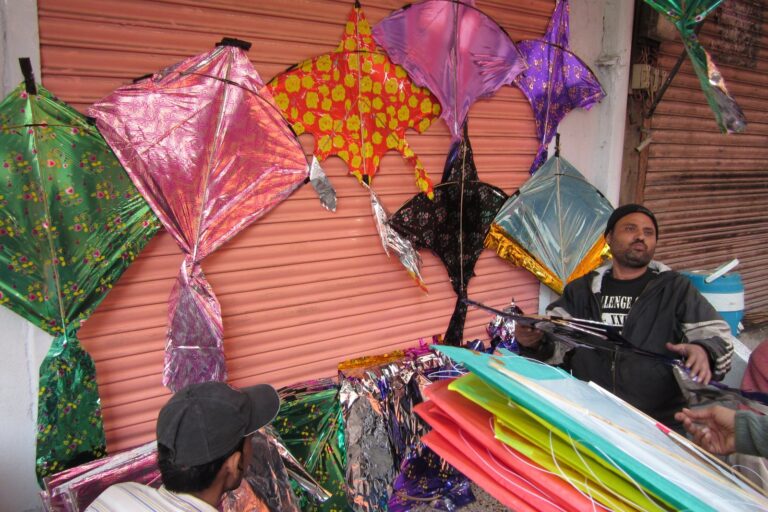
- Bapu Bazaar (between Sanganeri Gate and New Gate): everyday cotton, razais, kurtas and fabric by the metre. Most shops open roughly 11 am to 8–9 pm; the market runs all week, though individual shutters vary. Quality is mixed — compare three shops.
- Sanganer or Bagru half-day: buy at a workshop where you can see blocks and printing tables. Both villages are an easy half-day from Jaipur and sit on the same southern axis as the Bagru/Sanganer note in our weekend getaways from Jaipur guide.
- Anokhi city stores and the Anokhi Museum of Hand Printing at Amber: fixed-price textiles. Museum hours per anokhimuseum.com: Tue–Sat 10:30 am–5 pm, Sun 11 am–4:30 pm, closed Mondays; also closed for summer maintenance (typically late May to mid-July).
- Rajasthali (MI Road, opposite Ajmeri Gate): government emporium with printed tags — use it as a price baseline. Sunday hours conflict across listings; phone ahead.
Fair ₹ range
AsiaByLocals (2026): bedspreads ₹800–3,000, scarves ₹200–600, kurtas ₹400–1,200, cotton fabric ₹150–500/m. Offbeatpeak’s Bapu table is similar (kurtas ₹400–1,000; double sheets ₹600–1,500). Hand block costs more than screen print — if a “hand block” double sheet is far below ₹600, check the reverse.
30-second authenticity check
- Turn the cloth over. On hand block, dye usually soaks through; on many screen and digital prints the back is faint or blank. Cotton Bazaar and craft guides treat this as a guide, not absolute proof.
- Look for tiny gaps or overlaps where wooden blocks meet, and compare two repeats — they should not be pixel-identical.
- Feel for a rubbery coated layer (common on pigment screen print).
- For bandhani, dots should be slightly raised; flat printed dots are imitation (Offbeatpeak).
Care
Wash new block prints cold, alone, the first time — colours bleed, especially in Jaipur’s hard water. Mild detergent, no bleach, dry in shade. Dark indigo and reds need the most care.
Jootis (mojari): leather that stretches
Jootis (mojari) run from plain everyday pairs to heavy bridal embroidery. Do not assume “camel leather” unless the shop states it for that pair — many are buffalo or cow leather, and tourist stock is often rexine.
Where to buy
- Nehru Bazaar (towards Ajmeri Gate from Bapu): widest jutti selection according to several 2026 guides; roughly 11 am–9 pm.
- Bapu Bazaar: convenient if you are already buying textiles; Offbeatpeak’s per-market table puts fair pairs here around ₹400–1,500.
- Skip unsolicited “special shop” detours from auto drivers — commission is routinely baked into the quote (JaipurItinerary and Offbeatpeak both warn of 30–40% guide commission).
Fair ₹ range
Sources disagree a little. A workable band for Indian buyers: simple pairs ₹300–600, decorated ₹600–1,500, bridal ₹2,000–5,000 (Hiistories; AsiaByLocals; Offbeatpeak). Tourist opening quotes in Bapu often start near ₹800–1,200 for pairs that settle closer to ₹300–600 after bargaining (JaipurItinerary).
30-second authenticity check
- Ask whether both upper and sole are leather.
- Look for hand stitching with cotton strand along the sole edge, not glue alone.
- Press the insole — cardboard inserts are a bad sign.
- Real leather is supple and smells of leather; rexine is stiffer and shinier.
- Hand embroidery is slightly uneven. Buy snug: traditional pairs stretch and often have no left/right until broken in (Offbeatpeak, JaipurItinerary).
Care
Wear them around the house for a few days before a long walk. Wipe with a dry cloth; condition leather occasionally. Avoid soaking — water marks and warps the sole.
Blue pottery: quartz, not clay
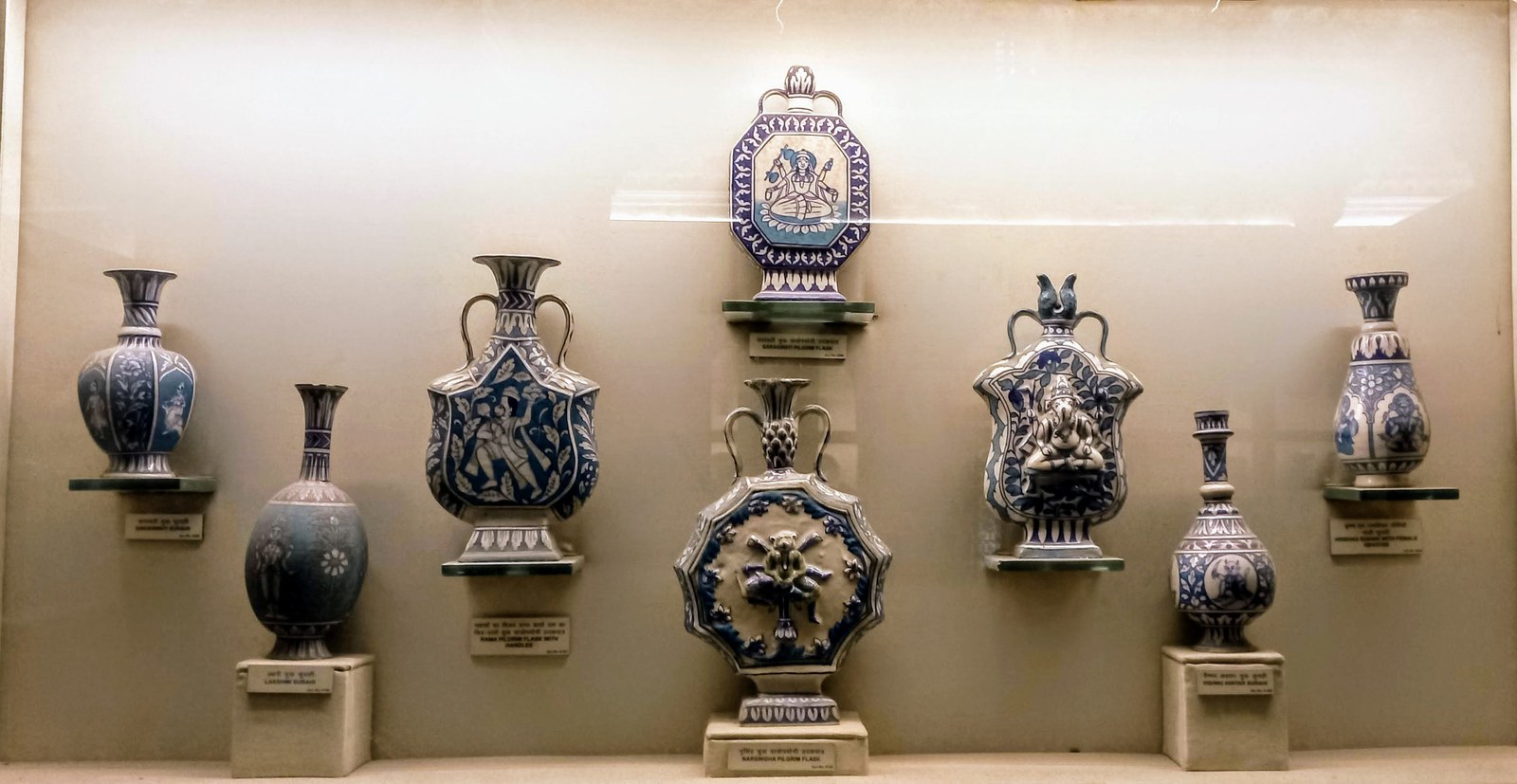
Jaipur blue pottery uses a quartz paste (glass powder, Multani mitti, borax, gum) — not potter’s clay — glazed in cobalt and turquoise, which is why genuine pieces feel light. Kripal Singh Shekhawat revived the craft mid-century; his family’s studio still sells.
GI note: Blue Pottery of Jaipur is GI Application No. 66 on the IP India register. As of early November 2026 the public page still showed status “Registered” with validity listed through 13 August 2026 and no newer renewal document visible. Use that as context, and re-check the live register if a seller leans on “GI protected” after that date.
Where to buy
- Kripal Kumbh, B-18A Shiv Marg, Bani Park: working studio-shop. Hours typically Mon–Sat 10:30 am–6 pm, Sunday about 11 am–5:30 pm; phone +91-141-2201127. Free to browse; painting sessions by arrangement.
- Jaipur Blue Pottery Art Centre (Amer Road / Govind Nagar): specialist shop; aggregator hours often ~8:30 am–8:30 pm — confirm late visits.
- Rajasthali for tagged comparison prices. Be wary of heavy “blue pottery” near Hawa Mahal — often ordinary ceramic painted blue (Aalacart, JaipurStuff).
Fair ₹ range
AsiaByLocals: about ₹200 for small tiles up to ₹5,000+ for large plates and vases. JaipurItinerary: tiles ₹200–500, small bowls ₹300–600, decorative plates ₹500–1,500. Workshop pieces cost more than bazaar lookalikes; that gap is often the authenticity premium.
30-second authenticity check
- Pick it up. Real blue pottery is light for its size; dense heavy white bodies with perfect repeats are usually printed ceramic.
- Check the base: often sandy, off-white, partly unglazed.
- Brushwork should vary piece to piece; look for small glaze pools and pinholes.
- Freehand motifs beat sticker-perfect patterns (Aalacart, JaipurStuff).
Care
Decorative first. Low-fired glaze chips easily — do not dishwasher, microwave or use for hot oily cooking unless the maker says so. Hand-wash, dry well, pack with padding.
Sanganer or Bagru half-day
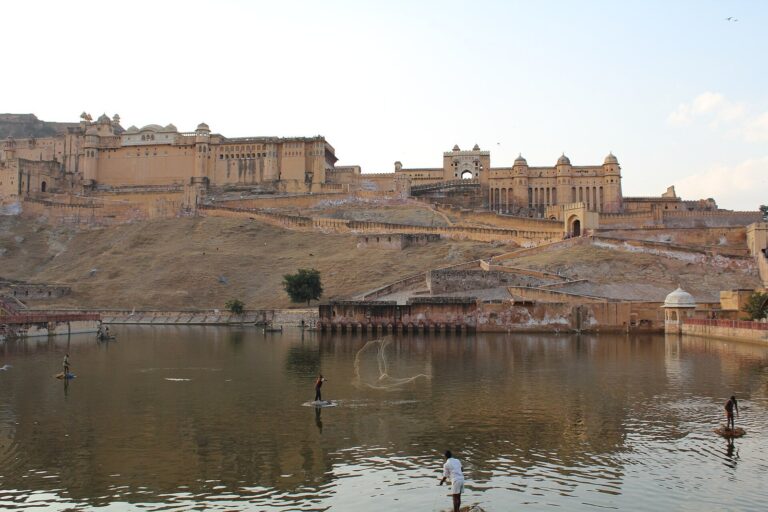
If block print is your main buy, spend a morning in Sanganer (south of Jaipur) or Bagru (southwest) at a chippa workshop. Watch the blocks, then buy metres or made-ups you have inspected. Keep forts, bazaars and villages for separate half-days — see weekend getaways from Jaipur for the Bagru/Sanganer note.
Bargaining and commission shops
- Compare three or four shops for the same item.
- On unpriced bazaar goods, guides commonly suggest offering about half the asking price and settling near 60–70% (AsiaByLocals, JaipurItinerary, Offbeatpeak).
- Fixed-price tagged shops (Anokhi, Fabindia, Rajasthali, many boutiques) do not bargain — do not try.
- Drivers and street “guides” often earn 30–40% commission baked into your bill. Decline the special showroom; walk yourself to Bapu, Nehru or a named studio.
- UPI works in most established shops; keep small cash for tiny stalls and tips.
Packing and shipping home
Fabric and jootis pack easily in a cabin bag if you watch airline weight — see the carry-on packing list and 3-day carry-on backpack guides. Blue pottery needs soft cloth, then bubble wrap, boxed with zero rattle; workshops often courier-pack larger sets — photograph the sealed box. On trains, keep pottery under the berth, not in the aisle.
FAQ
What should I buy first on a short Jaipur trip?
One craft done well beats three rushed buys. For most Indian travellers that means a hand-checked block-print bedspread or metres of fabric, or a leather jutti pair from Nehru/Bapu, plus a small blue pottery tile or bowl from a named studio if you have time.
Is Bapu Bazaar open on Sunday?
The market generally runs all seven days, roughly late morning to about 8–9 pm, but individual shops set their own hours and a few shut on Sundays or holidays. Midday to early evening is the safest window.
Where is the best place for authentic blue pottery?
Start at Kripal Kumbh in Bani Park or the Jaipur Blue Pottery Art Centre on Amer Road, then use Rajasthali only as a price check. Avoid heavy, perfectly printed “blue” ceramics in tourist lanes near the palaces.
How do I spot fake block prints quickly?
Turn the fabric over (dye should soak through on most hand blocks), look for slight gaps where blocks meet, and compare two pattern repeats — machine and digital prints look identical. A rubbery coated face often means pigment screen print.
Should I bargain everywhere?
No. Bargain in unpriced bazaar stalls; do not bargain in tagged fixed-price stores. If a driver brought you to the shop, assume the quote already includes their cut and walk away to a shop you found yourself.
Bottom line
Treat block prints, jootis and blue pottery as three decisions: place, price band, then the hand check. Calibrate at Rajasthali or Anokhi, buy textiles and shoes in Bapu/Nehru or at a Sanganer/Bagru workshop, and buy pottery from a working studio — not the commission loop.