Fan and PTC blowers are fast but noisy and drying. Halogen, quartz and carbon warm whoever sits in front of them, not the whole room — fine for a desk, wrong for overnight sleep.
Every winter the same question returns: oil-filled, fan, halogen or carbon? The types feel different, but not the electricity maths. This guide covers how each heats, closed-bedroom safety, wattage sizing and the ISI mark — drawing on ValueForMoney’s 2026 buying guide, Studio Matrx, RichDeals, Orient Electric and SmartHouseGears, plus listings checked in early November 2026.
For the 16A socket rules that also cover geysers and induction plates, see our geyser buying guide and kettle and induction guide.
Four types, four jobs
India sells four electric families you will actually see on Amazon and Flipkart. Pick by the job, not the marketing photo.
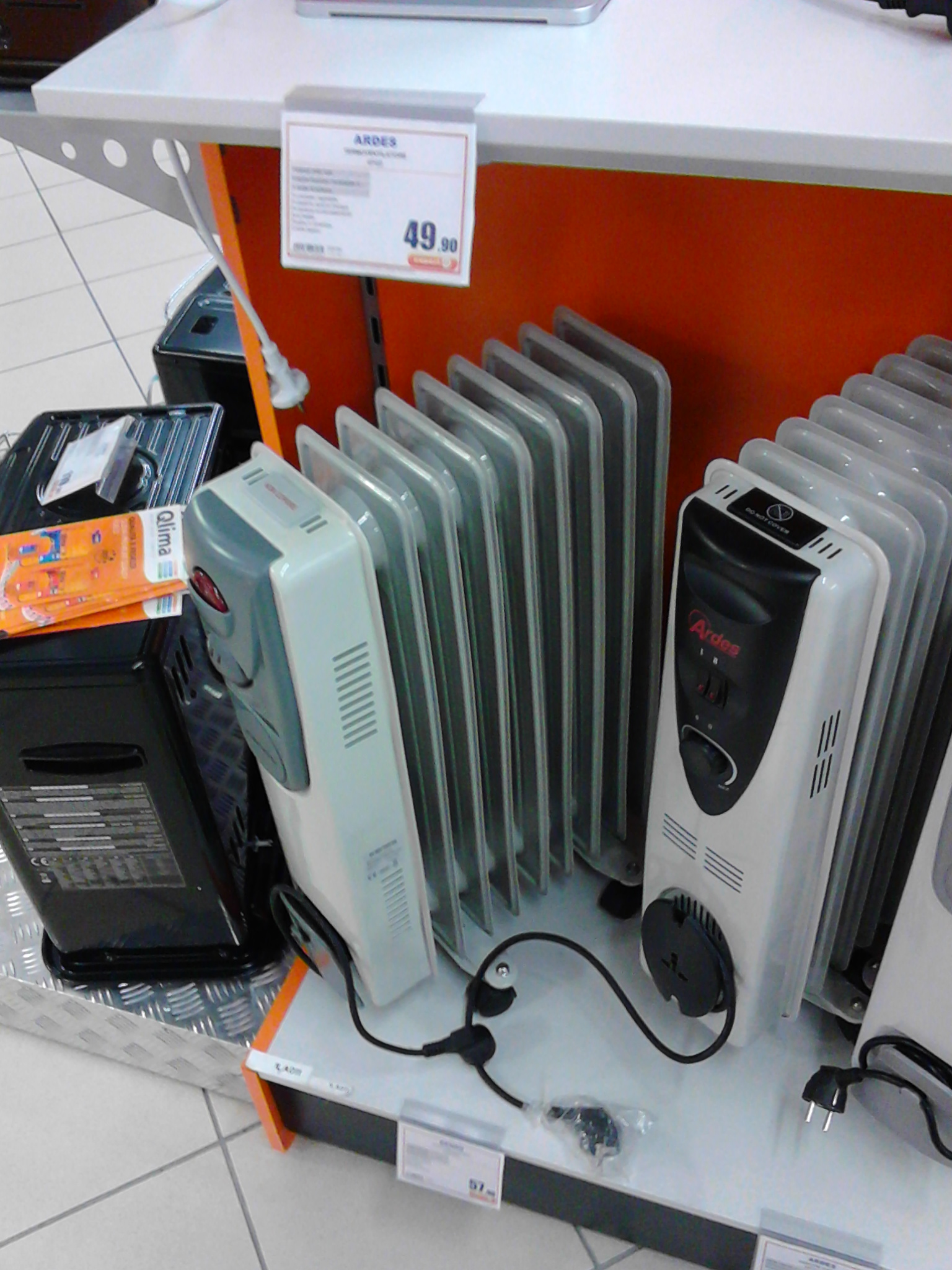
- Oil-filled radiator (OFR): sealed oil heats metal fins that warm the room by radiation and gentle convection. Silent, slow to start (often 15–20 minutes), stays warm after switch-off. Bedroom pick on every major guide.
- Fan / PTC blower: coil or ceramic element plus a fan. Fast and cheap, but noisy and drying — quick warm-up only, not overnight.
- Halogen, quartz and carbon: radiant rod heaters that warm whoever sits in front of them, not the whole room. Instant feel; fades when off. Desk heat, not overnight bedroom use.
- Convector: quieter air heating without a strong draft; useful for a living room or study, still less common than an OFR for overnight sleep.
Within the rod family, RichDeals puts it plainly: carbon is gentler with little glow and generally longer tube life but costs more; halogen is the brightest and harshest in a dark room; quartz is the cheapest starting point (live quartz heaters on RichDeals from about ₹549 as of their October 2026 check).
Side-by-side comparison
| Type | Warm-up | Noise | Dries air | Best for |
|---|---|---|---|---|
| Oil-filled radiator | Slow | Silent | Low | Bedroom, long sessions |
| Fan / PTC | Fast | Loud | High | Quick spot heating |
| Halogen / quartz / carbon | Instant (in front) | Silent | Low | Desk, one person |
| Convector | Medium | Quiet | Low | Living room, study |
Table pattern matches ValueForMoney and Orient Electric’s type guides. “Instant” for rod heaters means you feel warmth on your body quickly — the room air itself barely rises.
Running cost depends on watts, not the tube
Every common electric room heater is a resistive heater. Nearly every watt becomes heat. An 800 W quartz rod and an 800 W OFR setting use the same 0.8 unit an hour while the element is on. RichDeals’ worked example: at ₹6 to ₹9 a unit, that is about ₹5 to ₹7 an hour. A 2,000 W heater at full load is about 2 units an hour, or roughly ₹12 to ₹18.
OFRs feel cheaper on the bill only when the thermostat cycles: once the room hits your set point, the element switches off and the fins keep radiating. Fan heaters and rod heaters usually stay on while you want heat. Shut doors, size the wattage correctly, and use the thermostat — that is the real saving, not a magic heater type.
Closed-bedroom safety (read this)
LPG, kerosene, coal and angithi heaters release carbon monoxide in sealed rooms (the CDC calls it an odourless gas that is most dangerous to people who are asleep). ValueForMoney and Studio Matrx both flag this as a recurring North Indian winter risk. Never run a fuel-burning heater in a closed room or while sleeping.
- Even with an electric heater, leave slight airflow — a cracked window or door. Winter AQI makes people seal rooms; a brief crack still matters for oxygen and humidity. Pair this with the sealed-room thinking in our air purifier guide rather than pretending a heater cleans air.
- Keep about a metre (sources say 3 ft to 1 m) clear of quilts, curtains and clothes. Never dry clothes on the heater.
- Stand it on a hard floor, not a rug. No ordinary room heater in a wet bathroom.
- If it must run overnight, Studio Matrx’s rule is an OFR with thermostat and tip-over cut-off, clear space, and a sound wall socket. Switching off before sleep remains the lowest-risk habit.
How many watts and fins?
SmartHouseGears suggests roughly 10 to 12 W per sq ft for a closed, normally insulated room. ValueForMoney uses a similar ~10 W per sq ft rule. Brand claims like “up to 400 sq ft” are optimistic for a single portable unit.
| Room | Rough area | Wattage band | Typical OFR fins |
|---|---|---|---|
| Small bedroom / study | ~100–120 sq ft | 1,000–1,800 W | 9 fins |
| Typical bedroom | ~120–150 sq ft | 1,200–1,800 W | 9 fins |
| Larger bedroom / hall | ~150–200 sq ft | 2,000–2,500 W | 11 fins |
| Cold / poorly insulated hall | ~180–250 sq ft | 2,500–2,900 W | 11–13 fins |
Many OFRs add an optional ~400 W PTC fan for the first 10 to 20 minutes. Use it as a booster, then let the radiator and thermostat take over so you are not paying for fan noise all evening.
Buying checklist
- ISI mark under IS 302 (Part 2/Sec 30). BIS lists room heaters under compulsory Scheme-I certification. ValueForMoney notes selling without the mark is illegal. Look for the ISI mark with a licence number on the unit or box.
- No BEE star label applies to room heaters — ignore “energy saving” badges that imply a star rating.
- Thermostat, overheat cut-out and tip-over switch — non-negotiable for bedroom use.
- Cool-touch body or a proper grille if you have kids or pets. Fins still get hot enough to burn.
- Fin count and wattage matched to the room (table above), not the biggest number on the box.
- Castor wheels — OFRs weigh around 12 to 15 kg; Bajaj Majesty RH 11F Plus is listed around 14.5 kg.
- 16A plug on bigger models (Glen ships one on several OFRs) and warranty with local service.
The Indian flat realities
Plug straight into an earthed wall socket. Never a thin extension board or multi-plug adapter — the same rule as a geyser or induction cooktop. A 2,000 to 2,500 W OFR draws about 9 to 11 A, so it needs a 16A point. Rented flats often only have 6A sockets; that mismatch is a common winter problem. Have a licensed electrician fit a proper point rather than forcing an adaptor.
A home inverter cannot sensibly run a room heater in a power cut. Size backup for lights, fans, router and laptops instead — see the inverter for home sizing guide. A normal smart plug is also a poor idea for unattended high-watt heaters; if you want automation elsewhere in the home, read smart plugs worth buying first and keep the heater on its own thermostat.
Dry heat plus Delhi or Jaipur winter air means dry skin and throat — a bowl of water helps a little; humidifiers are a separate topic. Electric blankets are another personal-warmth option (their own guide later) and do not replace these safety rules.
What they cost to buy (early Nov 2026)
Winter demand moves prices daily. Treat these as verified snapshots, not permanent deals.
| Type / model | Approx. price | Source / note |
|---|---|---|
| Quartz rod heaters | From ~₹549 | RichDeals live deals (Oct 2026) |
| Morphy Richards OFR 9-fin ~2000 W class | ~₹7,000–₹7,500 band historically; check live | Street prices swing; confirm listing |
| Morphy Richards OFR 09F 2400 W + PTC | ₹9,149 | SmartHouseGears / Amazon.in, 5 Nov 2026 |
| Bajaj Majesty RH 11F Plus | ~₹7,500–₹9,000 (Amazon snapshot ~₹8,099) | SmartHouseGears band; Amazon.in listing |
| Lazer Alpha 11-fin OFR with PTC | ₹8,439 | Moglix listing checked Nov 2026 |
| Glen OFRs with fan / turbo | ~₹10,400–₹13,000 on glenindia.com variants | Official site snapshot Nov 2026; older guides quoted lower |
Warranties often run 2 years (Morphy Richards / Philips-class) or about 3 years (Bajaj Majesty RH 11F Plus in verified listing data) — read the card for your SKU and confirm the ISI mark on the box.
FAQ
Which room heater is safest for a closed bedroom?
An oil-filled radiator (OFR) with a thermostat, overheat cut-out and tip-over switch. It is silent, has no glowing element and keeps radiating after the thermostat cycles. Leave a slight airflow crack, keep about a metre clear of bedding, and never run LPG, kerosene, coal or angithi heaters in a sealed room.
Do oil-filled heaters use less electricity than fan heaters?
No. Nearly every electric heater turns almost all of its watts into heat, so the bill depends on wattage and hours, not the type. An OFR can feel cheaper only because the thermostat cycles the element off once the room is warm.
How many watts do I need for a 120 sq ft bedroom?
SmartHouseGears suggests roughly 10 to 12 W per sq ft for a closed room, so about 1,200 to 1,800 W for 120 sq ft. ValueForMoney uses a similar ~10 W per sq ft rule. A 9-fin OFR suits a typical bedroom; 11 to 13 fins suit larger or poorly insulated rooms.
Is the ISI mark compulsory on room heaters in India?
Yes. Electric room heaters must meet IS 302 (Part 2/Sec 30) and carry the ISI mark under a BIS licence. There is no BEE star label for room heaters, so ignore vague energy-saving claims.
Can I run a room heater on a home inverter during a power cut?
Not sensibly. A 2,000 to 2,500 W heater draws far more than a typical home inverter can supply for useful time. Keep heaters on mains power; see our inverter sizing guide for what backup can actually run.
Bottom line
Buy an oil-filled radiator with thermostat, tip-over and overheat cut-out for a closed bedroom. Use a fan or PTC blower only for a short warm-up. Keep halogen, quartz and carbon for a desk or one person. Insist on the ISI mark under IS 302 (Part 2/Sec 30), plug into an earthed 16A wall point, leave a crack of air, and never run a fuel heater sealed overnight.
Photo: Antonio Mette, Wikimedia Commons, CC BY-SA 4.0. Standards: IS 302-2-30:2007 via BIS Scheme-I compulsory list. Prices checked early November 2026 and will change.