Pick the kadai by what you cook most: tri-ply for everyday sabzi and gravies, cast iron if you fry a lot. Pick the tawa by size and flatness, not by brand, and make sure it isn’t wider than your burner can heat.
A pressure cooker handles dal, rice and rajma. Almost everything else in an Indian kitchen happens in a kadai or on a tawa: the tadka, the sabzi, the pakoras, the rotis and the dosas. So these two are usually the next things people buy,.
This guide keeps it to a starter set matched to how you cook. It’s based on maker specs, food safety guidance, India’s 2026 cookware rules and Indian listings checked on 4 November 2026, not hands-on testing.
Start with how you cook
- Mostly sabzi, gravies and dal tadka: a tri-ply stainless steel kadai. It’s the most forgiving everyday choice.
- Frying pakoras, puris or samosas every week: a cast iron kadai. Its heavy body holds the oil temperature when cold batter goes in, so food fries crisp instead of soaking up oil.
- You cook on induction only: tri-ply with a magnetic outer layer, or cast iron with a flat base. Most old aluminium kadais won’t work at all (see our kettle and induction guide for the magnet test).
- You want the least upkeep: tri-ply. No seasoning, no rust, and it can go in a dishwasher if the maker allows it.
- Lots of low-oil cooking, eggs and thin dosas: a non-stick pan as a second piece, not your only one.
Kadai materials compared
| Material | Good at | Watch out for | 24 cm weight (example) |
|---|---|---|---|
| Tri-ply stainless | Even heat, sabzi, gravies, sour dishes, metal spatulas | Food sticks if you add it before the pan is hot; costs more | 1.55 kg (Stahl Artisan, with lid) |
| Cast iron | Deep frying, slow-cooked sabzi, holding heat | Heavy, rusts if left wet, slow to heat | 2.34 kg without lid (Meyer) |
| Sheet iron (lohe ki kadhai) | Fast heating, tadka, frying | Thin, can develop hot spots, rusts | Varies |
| Non-stick aluminium | Low-oil cooking, easy release | Medium heat only; coating wears out | 1.3 kg (Prestige Omega Deluxe) |
Weights are from maker or retailer listings. They matter more than people expect: a full cast iron kadai is hard to lift one-handed to pour a gravy.
Tri-ply: full-body beats bottom-only
Tri-ply means an aluminium core sandwiched between two layers of steel. In a full-body (or “fully clad”) kadai those layers run up the sides, so heat spreads evenly and a gravy doesn’t scorch at the edges. Cheaper “sandwich bottom” pieces have the aluminium only in a disc under the base. Look for a stated thickness: the Meyer Trivantage Pro and Hawkins tri-ply kadais list 2.5 mm and 3 mm respectively.
The trick with steel is heat first, then oil, then food. Food sticks when it goes into a cold pan.
Cast iron vs sheet iron
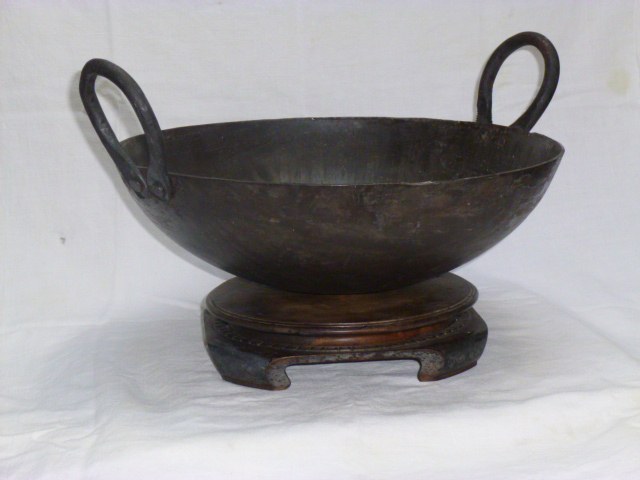
Both are “iron kadai” on a listing, but they behave differently. Cast iron is moulded, thick and slow to heat but very steady. Sheet iron is thinner, heats fast and is lighter, which many cooks like for tadka. Wonderchef’s own listing warns that items sold as sheet iron are not cast iron, so check which one you’re actually buying.
Choosing a tawa
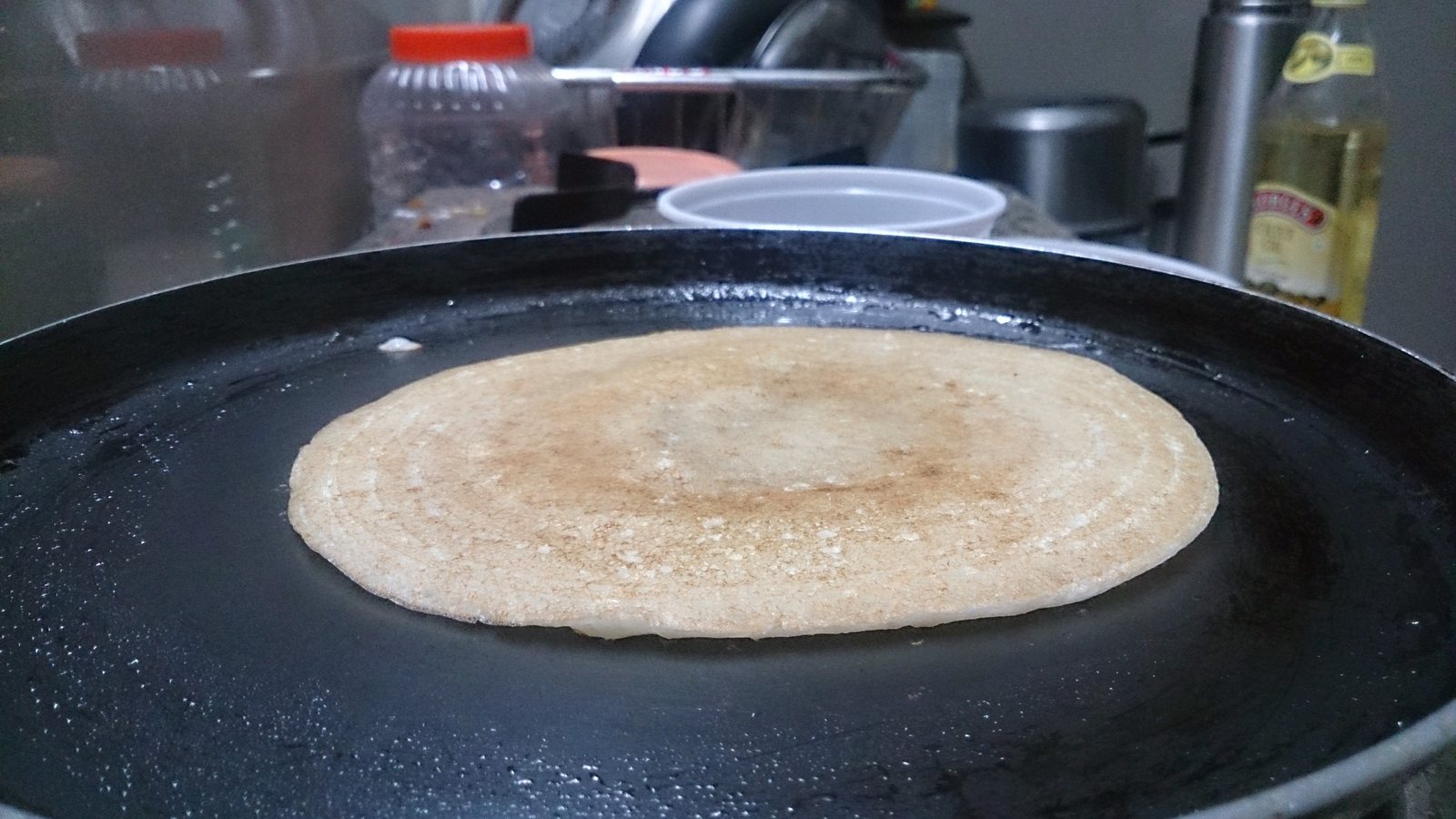
- Flat for rotis and dosas. A concave tawa is mostly for puri, bhatura or rumali-style breads.
- Size by use: about 25 to 28 cm for everyday rotis and parathas, 30 cm and up for big dosas. Don’t buy one much wider than your burner, or the edges stay cool. Our gas stove guide covers burner sizes.
- Thickness: thin tawas warp and develop hot spots, so one roti burns while the next is pale. A heavier cast iron tawa stays flat.
Cast iron is the long-term choice for rotis and dosas. A non-stick tawa makes thin dosas easy at first, but it shouldn’t be heated as high as cast iron, so it’s a poor fit for rotis puffed over high heat.
A sensible starter set
- Small household, mostly gravies: a 24 cm tri-ply kadai with lid and a 26 cm cast iron tawa.
- Family that fries often: a 24 to 26 cm cast iron kadai and a 26 to 28 cm cast iron tawa. Add a small tri-ply pan later if the weight bothers you.
- Induction-only rented flat: a tri-ply kadai and a flat cast iron tawa that the maker says works on induction.
- Add later: a 20 to 24 cm non-stick fry pan for eggs, cheela and low-oil cooking.
What size kadai?
Roughly: 20 to 22 cm (about 1.5 to 2 litres) for one or two people, 24 to 26 cm (about 2.5 to 3 litres) for a family of four, and 28 cm and up for guests and festival frying. Capacity at the same diameter varies with depth, so read the litres too. If you’re still deciding on the cooker itself, see our pressure cooker size guide.
What they cost right now
| Piece | Type | Price seen | Worth knowing |
|---|---|---|---|
| Lifelong tri-ply deep kadai, 24 cm, 2.8 L | Tri-ply | ₹1,749 (Lifelong store) | Gas and induction |
| Stahl Artisan tri-ply kadhai, 24 cm, 2.4 L | Tri-ply | ₹2,400 to ₹2,849 (retailers, Amazon.in) | Listed as PTFE and PFOA free; 3-year warranty |
| Meyer Trivantage Pro kadhai, 24 cm, 2.9 L | Tri-ply | ₹3,667 (potsandpans.in) | 10-year warranty listed |
| Rock Tawa cast iron kadhai, 24.5 cm, 2 L | Cast iron | ₹627 (Flipkart) | Pre-seasoned |
| Wonderchef Forza cast iron kadhai, 24 cm | Cast iron | ₹1,299 (Wonderchef store) | Pre-seasoned, induction friendly |
| Prestige Omega Deluxe Granite kadai, 24 cm | Non-stick | ₹1,352 to ₹1,390 (bigbasket, Prestige store) | Aluminium, gas and induction |
| Rock Tawa pre-seasoned cast iron dosa tawa, 10 to 12 inch | Cast iron tawa | ₹789 to ₹839 (Rock Tawa store) | Gas, electric and induction per the maker |
| Meyer pre-seasoned cast iron tawa, 26 cm | Cast iron tawa | ₹1,708 (Amazon.in) to ₹2,194 | Listing says gas only in one place, induction in another; check before buying |
Prices checked on 4 November 2026; they move with sales, so compare real prices rather than the MRP. These are examples, not recommendations.
Non-stick: use it gently
Non-stick coatings are safe in normal cooking, but they don’t like high, dry heat. Singapore’s food agency advises never preheating an empty non-stick pan, cooking on low to medium heat, keeping the kitchen ventilated and replacing pans whose coating is badly scratched or peeling. That’s why non-stick suits eggs and low-oil sabzi, not a smoking-hot tadka or a high-flame roti.
Use wooden or silicone spatulas, and replace the pan once the surface starts flaking.
Seasoning and care for iron
- Even pre-seasoned pans improve with use. Wash, heat dry, rub a thin layer of oil, heat until it just smokes, and let it cool. Repeat a few times.
- Dry it on the flame after every wash, then wipe a few drops of oil on. This matters most in humid months and the monsoon, when iron rusts overnight.
- Keep sour dishes short. Tamarind, tomato and kokum can strip seasoning and give food a metallic taste or dark colour. Cook and move them to a steel bowl.
- Store it dry and low. Cast iron is heavy, so keep it on a low shelf rather than stacked overhead; our small kitchen organising guide has ideas.
- On induction, lift, don’t drag, so a rough iron base doesn’t scratch the glass.
Buying checklist
- Material matched to your main dish, not to the discount.
- For tri-ply: full-body construction and a stated thickness.
- For iron: cast or sheet iron clearly stated, and a weight you can lift when the pan is full.
- Flat, magnetic base if you use induction, and the listing says so.
- Riveted handles; a stay-cool or wooden handle on the tawa.
- For non-stick: a clear PFOA-free statement on the listing or box, and the coating warranty in writing.
- The ISI mark where it applies: under the 2026 cookware quality control order, it’s compulsory for wrought aluminium utensils from 1 October 2026 for large makers (later for small and micro makers). Stainless steel utensils were dropped from the rule, so don’t expect it on a tri-ply kadai.
FAQ
Which kadai is best for daily Indian cooking?
For most homes, a full-body tri-ply stainless steel kadai of about 24 cm. It heats evenly, takes a metal spatula, goes in the sink without fuss and works on gas and induction. If you deep-fry often, a cast iron kadai is better for frying.
Is a cast iron tawa better than a non-stick tawa?
For rotis, parathas and dosas, a seasoned cast iron tawa usually lasts far longer and handles high heat well. A non-stick tawa is easier for thin dosas with little oil at first, but it should stay on medium heat and needs replacing once the coating wears.
Can I use a cast iron kadai or tawa on induction?
Usually yes, because iron is magnetic, but the base must be flat and sit fully on the glass. Lift it rather than drag it, and check the listing, since some cast iron tawas are sold as gas-only.
Why does my iron kadai turn food black?
Usually because the pan isn’t well seasoned yet, or because sour food like tamarind or tomato sat in it for a long time. Cook acidic dishes briefly and move them to a steel bowl, and keep re-seasoning until the surface turns smooth and dark.
Should a steel kadai have an ISI mark?
Not necessarily. India’s 2026 cookware order makes the ISI mark compulsory for wrought aluminium utensils, and it dropped stainless steel utensils from the earlier rule. A missing ISI mark on a steel or tri-ply kadai isn’t a red flag on its own.
Bottom line
Next to your pressure cooker, two good pieces do most of the work: a 24 cm kadai in tri-ply or cast iron, and a flat cast iron tawa sized to your burner. Buy for how you cook, keep non-stick for gentle jobs, and dry your iron on the flame every time. If you’re building a kitchen from scratch, our first kitchen checklist covers the rest.
Photos: a dosa on a tawa by Kumawat10, from Wikimedia Commons, licensed CC BY-SA 4.0; an iron kadai by FiveRings, from Wikimedia Commons, licensed CC BY-SA 3.0. Weights, thickness and warranties from maker and retailer listings. Prices from Amazon.in, Flipkart, bigbasket and maker stores on 4 November 2026; they will change.