For most small Indian kitchens, a 20 to 25 litre solo microwave at about ₹6,000 to ₹8,500 is the most useful first buy. A 4 to 4.5 litre air fryer costs less (about ₹2,900 to ₹4,900) but does a narrower job. A convection microwave is the one box that reheats, grills and bakes, if you have the counter space and a 16A socket.
A new flat, one short counter, and a budget for one appliance. Every listing says it can “bake, grill and roast”, but these three don’t do the same job, and the wrong first buy usually ends up as storage space.
This guide answers the microwave vs OTG vs air fryer question for a small Indian kitchen: what each one is really good at, three questions that decide which to buy first, and the size, socket and safety checks to do before you order. It’s based on manufacturer specifications, BIS documents and retailer listings checked in November 2026, not hands-on testing. If you’re setting up a kitchen from scratch, our first kitchen checklist covers the basics first.
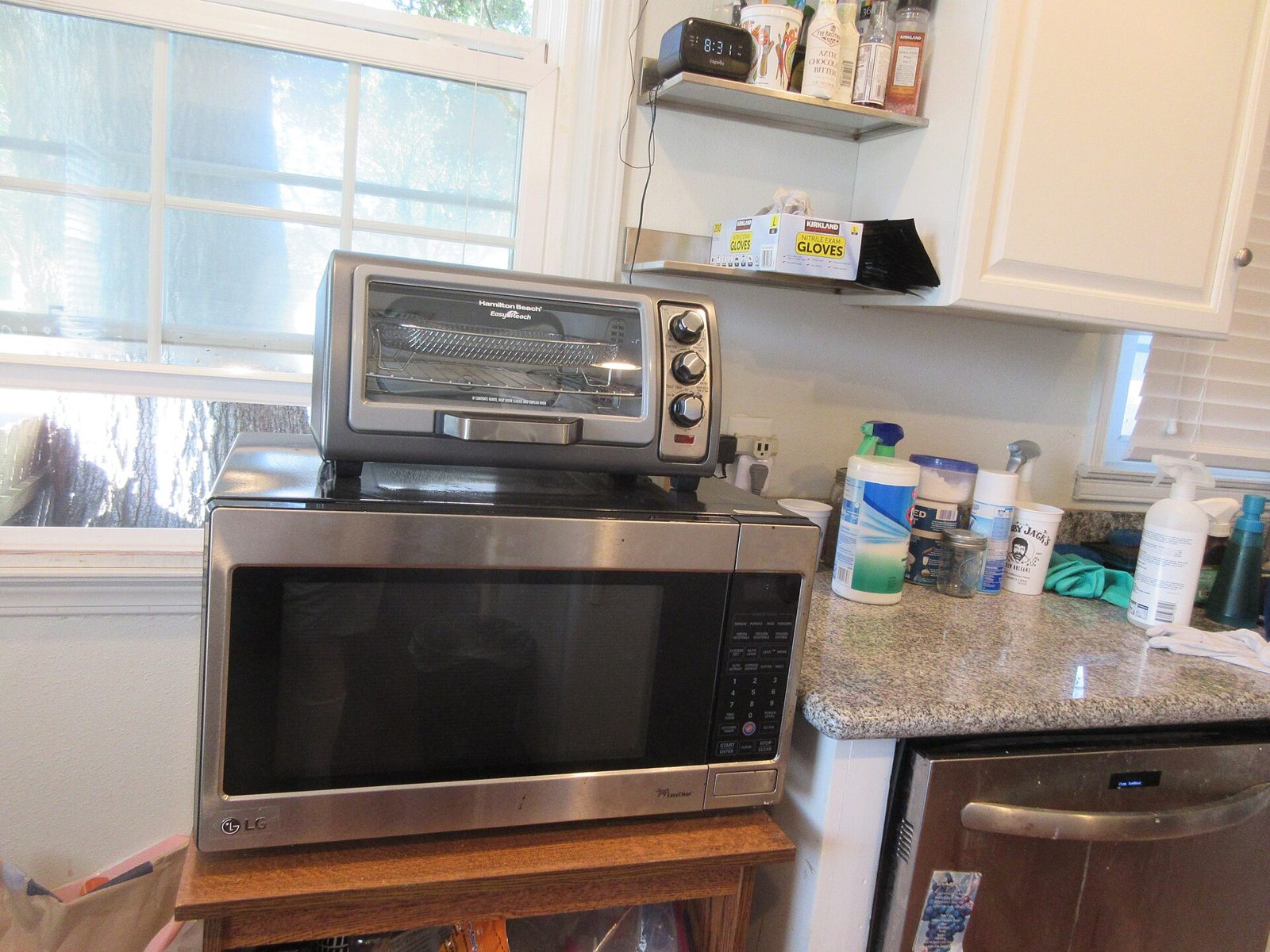
How each one cooks, in one line
- Microwave: heats the water inside the food. Fast for reheating and defrosting, but it doesn’t brown or crisp anything unless the model has a grill or convection heater.
- OTG (oven, toaster, griller): heating rods above and below a box, like a small conventional oven. Good for baking and grilling, but slow to preheat.
- Air fryer: a heater and a strong fan blowing hot air around a small basket. Very good at crisping, quick to heat up, small capacity.
Which job does each do best?
| Job | Microwave | OTG | Air fryer |
|---|---|---|---|
| Reheating dal, sabzi, rice, milk | Best | Slow, not suited to liquids | Poor with liquids |
| Defrosting | Best | No | No |
| Samosas, pakoras, fries, cutlets | Goes soggy (solo) | Works, slower | Best |
| Reheating fried leftovers | Goes soggy | Works | Best |
| Paneer tikka, kebabs | Grill or convection models | Good | Good, small batches |
| Cakes, cookies, bread, pizza | Convection models only | Best | Small batches only |
| Ready to cook | Instantly | After 10–15 min preheat | After 2–3 min |
The table follows comparisons published by Haier India, Glen and Toq.in; preheat times are Glen’s figures.
Three questions that decide what to buy first
1. What do you actually cook on most days?
Think about the last two weeks, not the recipes you plan to try. If most meals are cooked on the gas or induction and eaten over a day or two, you need to reheat, and that’s a microwave. If you regularly fry evening snacks or buy frozen fries and nuggets, an air fryer will get daily use. If you bake once a week or more, an OTG is the right first buy. If you bake twice a year, it isn’t.
2. How much counter space do you have?
Measure the spot before you shop and compare it with the outer dimensions on the listing, not the litres. A 4.5 litre air fryer such as the Prestige Nutrifry is listed at 38 × 38 × 36 cm, roughly the footprint of a pressure cooker on its side. A 20 litre microwave or a 16 litre OTG needs more width and a clear gap around it for ventilation, as set out in its manual. Our guide to organising a small Indian kitchen helps you find that space.
3. How many people are you cooking for?
Capacity matters most for the air fryer, because a crowded basket doesn’t crisp. Use this as a starting point:
| Household | Microwave | Air fryer | OTG |
|---|---|---|---|
| 1–2 people | 20 L | 3–4.5 L | 9–16 L |
| 3–4 people | 23–25 L | 4.5–6 L | 16–25 L |
| 4–6 people, or frequent baking | 28–32 L | 6 L or more | 35–60 L |
Microwave sizes follow makers’ guidance as summarised by BestAppliance.in, and air fryer bands follow Haier India’s and Glen’s size guides. OTG bands reflect how the common 9, 16, 25 and 40 to 60 litre models are positioned.
Check your socket and power backup first
Most comparison pages skip this, and it matters in rented flats. At 230 V, a 6A socket handles about 1,380 W and a 16A socket about 3,680 W, as we explained in our kettle and induction guide. Here’s what the three draw, using the makers’ own ratings:
- Solo microwave: the Panasonic NN-ST26JMFDG (20 L) is rated 800 W output but 1,270 W input. The input figure is what your socket sees.
- Convection microwave: LG’s manual for the MC2846BV (28 L) lists 1,350 W in microwave mode and 1,950 W in convection mode. That needs a 16A socket.
- Air fryer: about 1,200 to 1,500 W for 4 to 4.5 litre models (1,200 W for the Prestige Nutrifry 4.5 L, 1,500 W for the Philips NA120 and HD9252). Use a 16A point.
- OTG: 800 W for 9 to 10 litre models, 1,200 W for the 16 litre Bajaj 1603T, and around 2,000 W for 40 to 60 litre ovens.
Don’t run two of these at once, or one with a kettle or induction plate, on one kitchen circuit without checking it can take the load. A home inverter sized for fans, lights and a router won’t run any of them during a power cut; see our inverter sizing guide if that matters. And don’t put any of them on a cheap smart plug; our smart plugs guide explains why.
What each one costs in India (November 2026)
These are selling prices seen on Amazon.in, brand stores and price trackers in the first two weeks of November 2026. They move daily, so treat them as bands, not quotes.
| Type | Examples | Price seen |
|---|---|---|
| Solo microwave, 20–24 L | Panasonic NN-ST26JMFDG 20 L; LG MS2043BP 20 L; IFB 24PM2S 24 L | ₹6,990; ₹7,690; ₹8,490 |
| Convection microwave, 23–28 L | Panasonic NN-CT353BFDG 23 L; Samsung MC28A5013AK 28 L; LG MC2846BV 28 L | ₹11,450; ₹13,550; ₹13,990 |
| Air fryer, 4–4.5 L | Judge by Prestige InstaAir 4 L; Prestige Nutrifry 4.5 L; Philips NA120 4.2 L; Philips HD9252 4.1 L | ₹2,899; ₹3,799; about ₹4,800–4,900; ₹7,499 |
| OTG | AGARO Marvel 9 L; Bajaj 1603T 16 L; Morphy Richards 40RCAD 40 L | about ₹1,700; about ₹4,500; about ₹9,700 |
The air fryer is often the cheapest, which is why it gets bought first. The real question is whether you’d use it more than a microwave.
Buying checklist for each
Microwave
- Solo, grill or convection: solo if you’ll only reheat and defrost; grill adds toast and tikkas; convection adds baking. If you won’t bake, solo is the better buy.
- Cavity: stainless steel or ceramic enamel cavities are easier to wipe after oily Indian food than painted ones. Samsung’s MC28A5013AK, for example, lists a ceramic enamel cavity with a 10-year cavity warranty.
- Magnetron warranty: this is the part that makes the microwaves, and its warranty varies from about 1 to 5 years. The LG MC2886BRUM, for example, carries 4 years on the magnetron.
- BIS mark: microwave ovens come under BIS’s compulsory registration scheme (IS 302-2-25), so look for the BIS Standard Mark with an R-number on the unit or box.
Air fryer
- Basket size for your household (see the table above), and outer dimensions against your counter.
- Temperature control up to about 200°C and a proper timer; Philips lists 80 to 200°C and up to 60 minutes for the HD9252.
- A dishwasher-safe or easy-clean basket, and a basket interlock that stops it when pulled out.
- Use proper utensils: wooden or silicone tongs only on a non-stick basket. Our kadai and tawa guide covers non-stick care in more detail.
OTG
- Capacity and tray fit: check your cake tin fits the inner tray, not just the litres.
- Separate top and bottom heating control, a convection fan if you bake bread or cookies, and a timer with a “stay on” mode for long bakes.
ISI mark for OTGs and air fryers: under BIS’s household appliances Quality Control Order, 2026, ovens and fryers need the ISI mark from 1 October 2026 for large, medium and foreign manufacturers. Small and micro makers have until January and April 2027, and declared older stock can be sold for up to six months. So prefer a unit with the ISI mark and licence number printed on it.
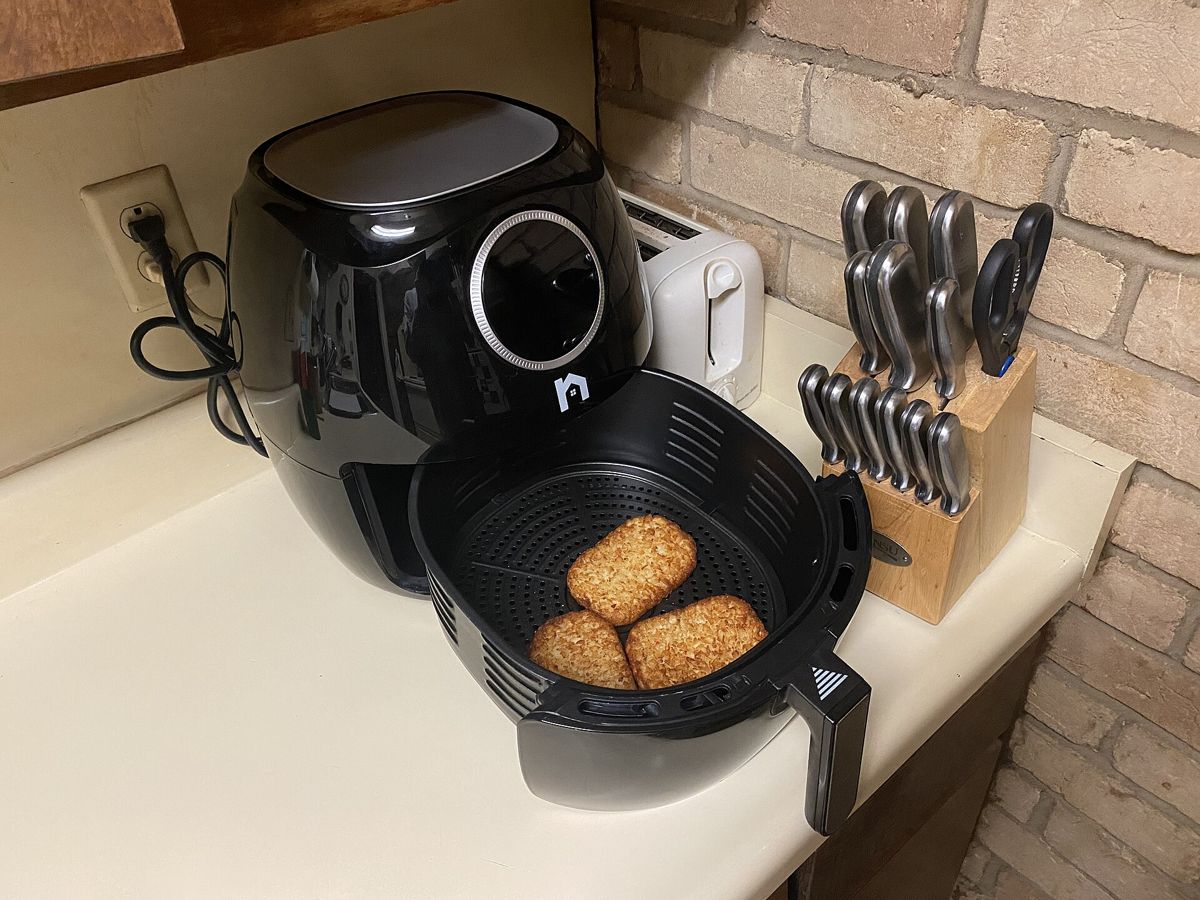
What about one box that does everything?
A convection microwave is the closest thing to an all-rounder: it reheats, grills and bakes small cakes. It costs roughly twice a solo model, needs a 16A socket, and doesn’t crisp like an air fryer. Some add an air-fry mode (the Midea 28 L is listed at ₹10,990), and some large OTGs, like the Morphy Richards 40RCAD, include an air-fry basket. Worth it only if you’ll use the modes; otherwise a solo microwave plus a small air fryer later costs about the same and does each job better.
A note on reheating safely
Microwaves heat unevenly, so cover the bowl loosely, stir halfway, and let it stand a minute before eating. The USDA’s leftovers guidance says to reheat leftovers to 74°C (165°F). Use glass or ceramic, not steel tiffins or thin plastic boxes, in microwave mode. Metal is only for grill and convection modes, if the manual allows it.
FAQ
Should I buy a microwave or an air fryer first?
If you mostly reheat home-cooked dal, sabzi and rice, buy a microwave first. Buy an air fryer first only if crisp snacks like fries, cutlets or samosas are what you’d cook most often, because it handles liquids and reheating curries poorly.
Can an air fryer replace a microwave?
Not for most Indian homes. An air fryer is great for crisping and reheating fried food, but it is poor at reheating liquids like dal and can’t defrost the way a microwave does.
Is an OTG better than a convection microwave?
For regular baking, yes: an OTG gives more even, oven-style heat and bigger trays. A convection microwave is better if you want one box that reheats daily and bakes occasionally.
What size air fryer do I need?
About 3 to 4.5 litres for one or two people, 4.5 to 6 litres for three or four, and 6 litres or more for larger families. A crowded basket won’t crisp, so size up if in doubt.
Do I need a 16A socket for a microwave or air fryer?
For an air fryer (about 1,200 to 1,500 W), a convection microwave (up to about 1,950 W) or a large OTG (about 2,000 W), yes. A solo microwave drawing about 1,270 W is close to a 6A socket’s roughly 1,380 W limit, so a 16A point is safer.
Bottom line
For most small Indian kitchens, buy a 20 to 25 litre solo microwave first, for about ₹7,000 to ₹8,500, because reheating is the job you’ll do every day. Add a 4 to 4.5 litre air fryer later if you fry snacks often. Choose an OTG first only if you bake every week, and a convection microwave only if you’ll use its baking mode and have a 16A socket for it. Whatever you pick, measure the counter, check the socket, and look for the BIS mark.
Photos: Infrogmation of New Orleans, Wikimedia Commons, CC BY-SA 4.0 (featured image); I am R., Wikimedia Commons, CC BY 2.0. Prices were seen on retailer listings, brand stores and price trackers in November 2026 and will change. Power ratings are from makers’ listings and manuals, not our own measurements.